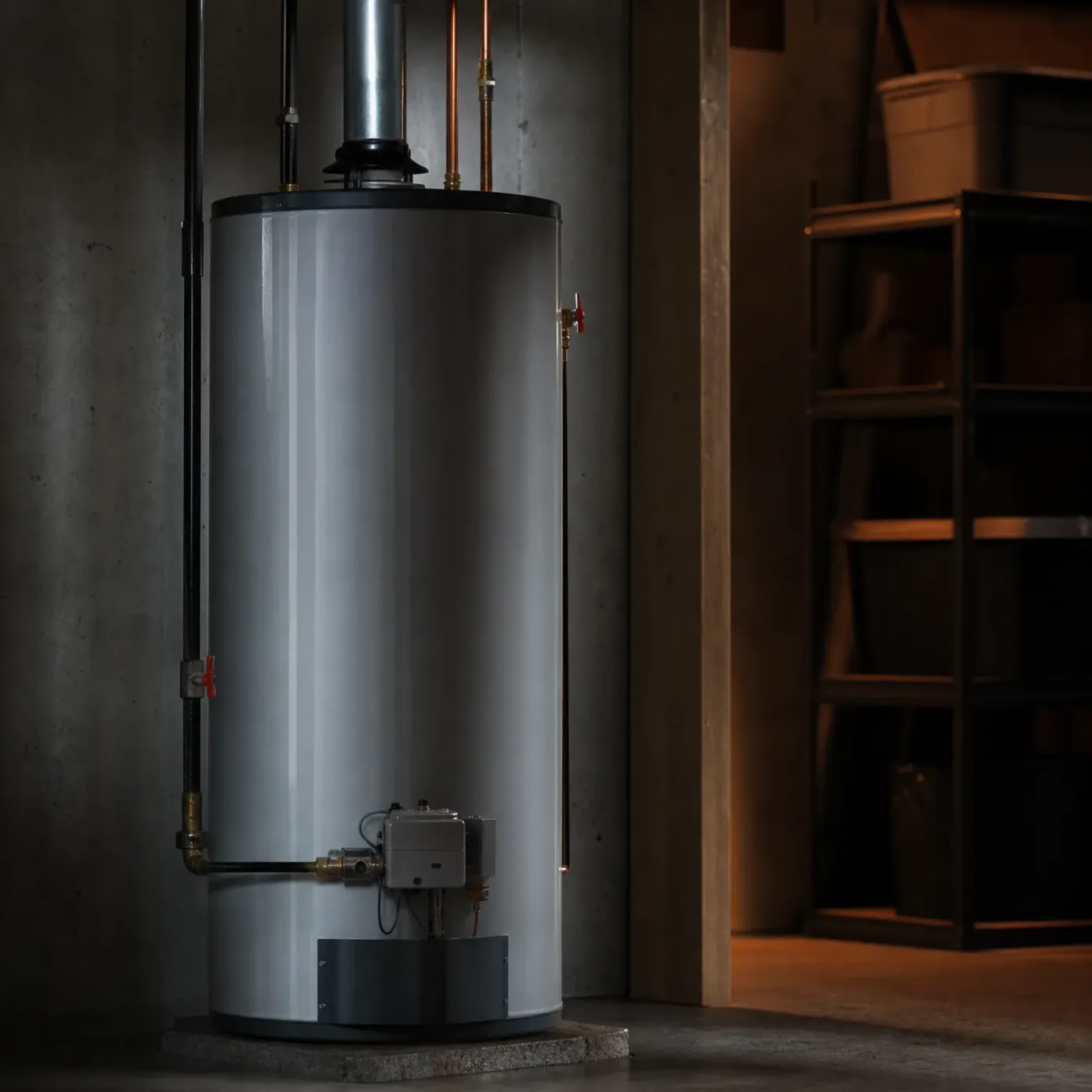
A large gray cylindrical gas water heater with copper and black pipes and a flue stack, standing on a concrete pad against a concrete wall, with a dark metal shelving unit in the background.

One form, no calling around

How long a water heater lasts in Florida

Florida's heat and humidity wear on a water heater faster than a mild climate would, and most homes here run on electric units, so the number you find online may not match what yours will see. This page gets into what actually shortens the life of a water heater in this state and what age signals it's time to plan ahead. If yours is already failing, skip the search for installers, the phone calls, and the repeat explanations, and get matched with one licensed local contractor who works on these systems all season.

Skip the search

A water heater in Florida lasts about 8 to 10 years, often less than the 10 to 13 years you see quoted for cooler states. Most homes here run electric tanks, and the heat and humidity push the unit harder year round since there's no cold snap to ease up on it. The tank also never gets a break the way one does somewhere with a real winter, since groundwater coming in stays warmer but the unit still runs daily, all year, with no slow season. Hard water in parts of the state adds to this, building scale on the heating element and the bottom of the tank, which makes it work harder to do the same job. If your water heater came with the house, check the installation date on the tank's label. Past 8 years, start paying attention to how it sounds and whether the water stays as hot as it used to.

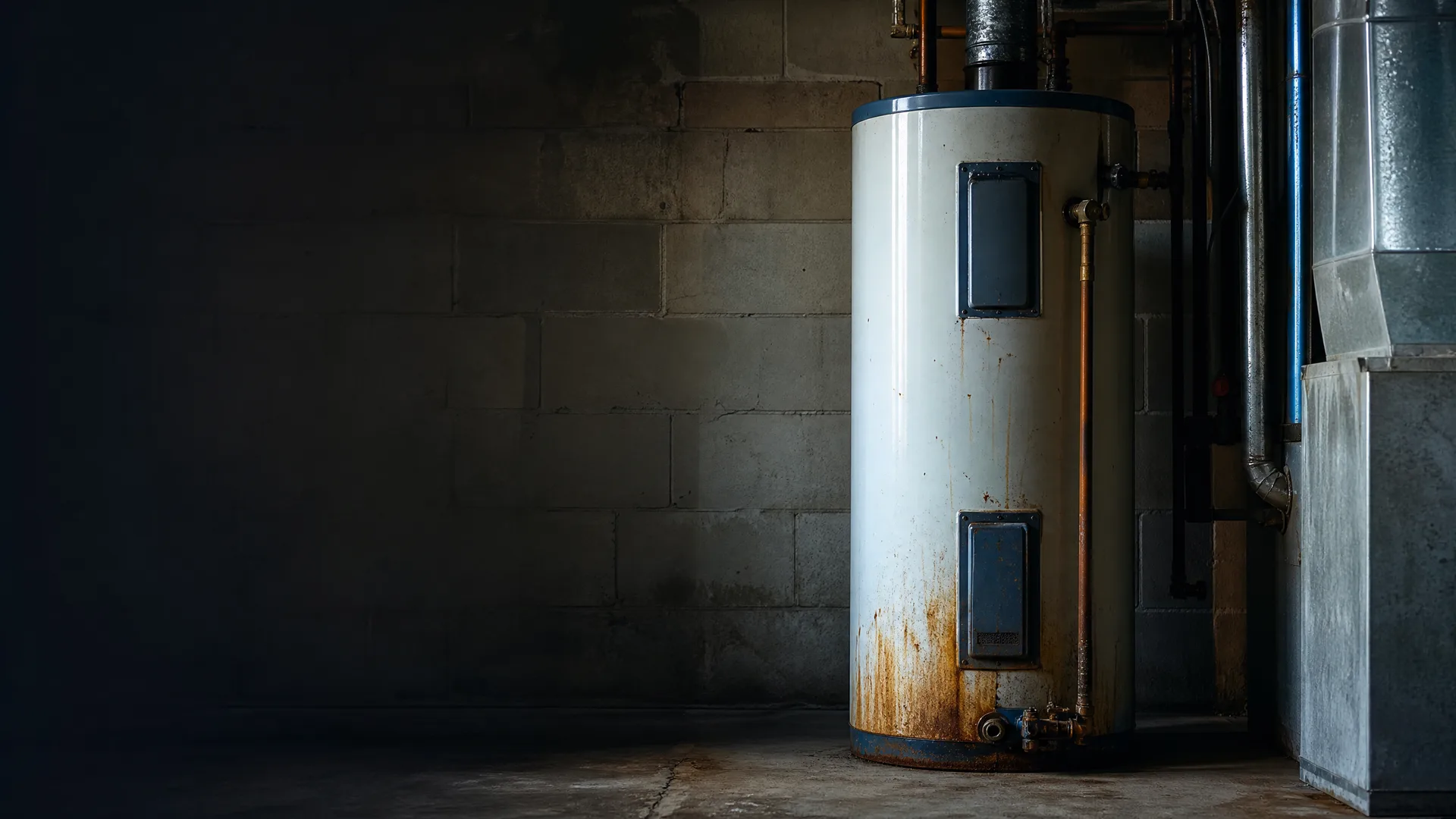
A rusting white and blue water heater with copper and steel pipes stands against a concrete block wall in a dim basement with a bare concrete floor.

You go down to the utility room after dinner to grab something from the shelf above the tank, and the light's still buzzing overhead the way it always does. That's when you see it, a thin rust streak running down the side of the tank and pooling where it meets the floor. The room's warm and close, like it always is this time of year, and you crouch down to touch the base to see if it's wet. It's been there nine years, you think, maybe ten. You stand there a minute, listening to it hum, before you go back upstairs to find out what a water heater is supposed to look like when it's still good.
Tank or Tankless: Which Lasts

Tank water heater

  • An electric tank in Florida runs about 8 to 10 years before the anode rod and tank lining give out from the heat and mineral load.
  • A failed tank usually means water on the floor, so you find out it's done the day it quits, not before.
  • Parts and labor for a straight tank swap are simpler since the water lines and electrical connection are already sized for it.
  • A larger household with more people showering back to back fits a tank's steady recovery better than a point-of-use unit.
  • The anode rod can be checked and swapped partway through the unit's life, which is one way to get more years out of it.
  • A tank takes up more floor space in the utility room or closet than a tankless unit does.

Tankless water heater

  • A tankless unit typically outlasts a tank, since there's no standing water sitting in a tank wearing on a lining day and night.
  • There's no tank to rust through and leak, so failure tends to show up as the unit not firing rather than water on the floor.
  • An electric tankless unit draws a heavy load for the minutes it runs, which means checking that the home's electrical panel can support it.
  • Installation often means rerouting electrical or water lines to match where a tankless unit needs to sit, not a straight swap.
  • Mineral buildup in Florida's water still affects a tankless unit's internal components, so it isn't maintenance-free just because the tank is gone.
  • A tankless unit frees up the floor space a tank would have taken, which matters in a small utility closet.
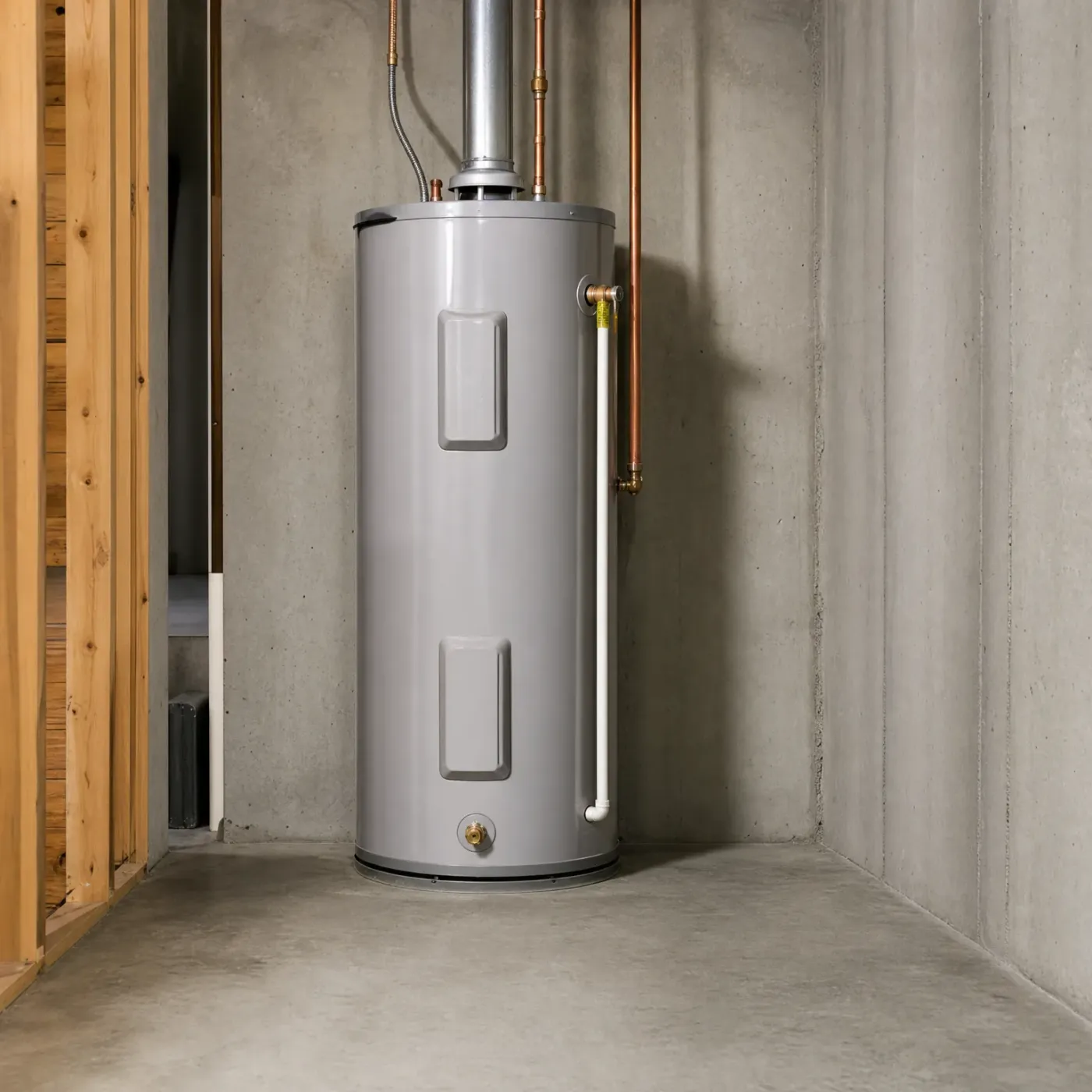
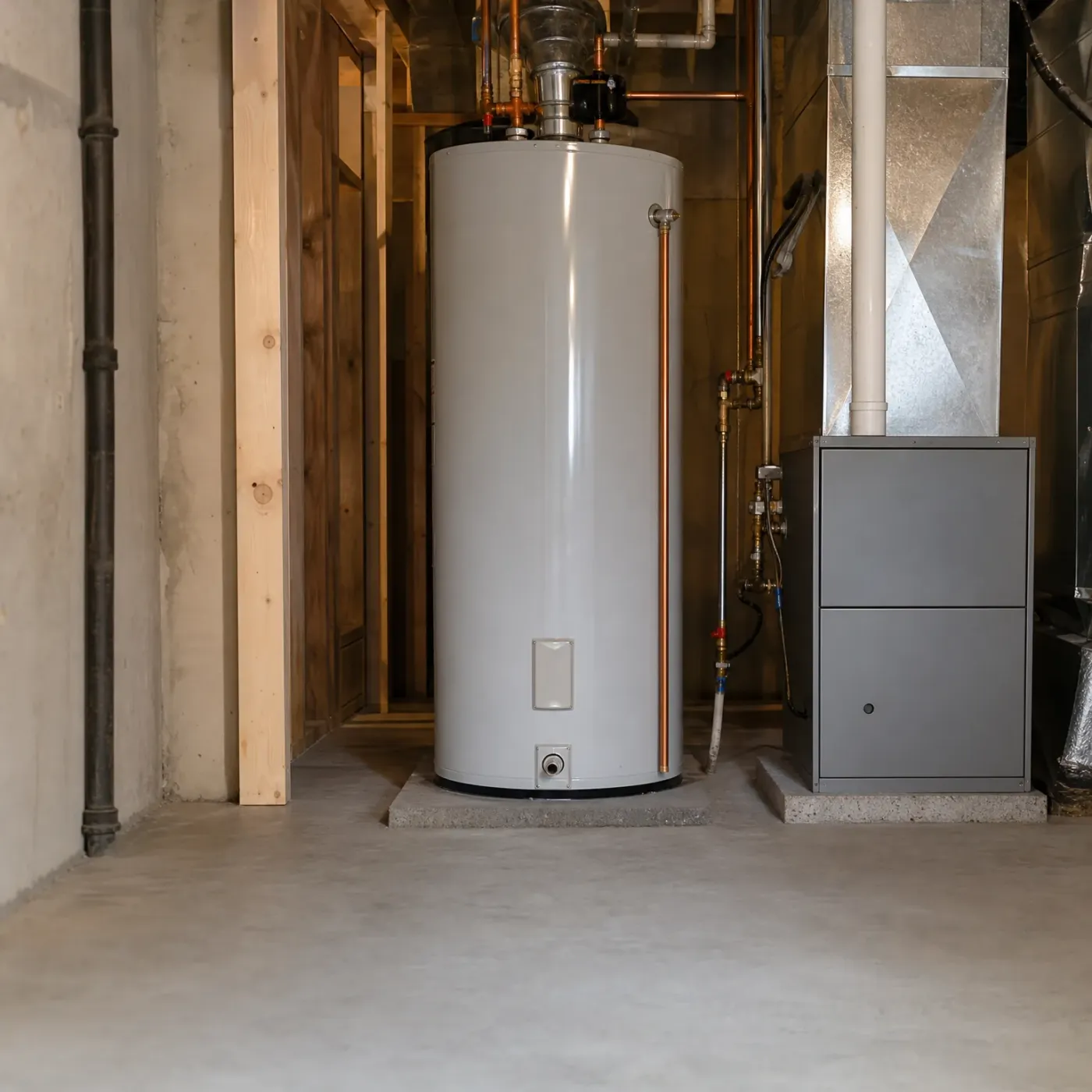
A gray cylindrical water heater standing in a concrete-walled basement corner, with copper and white pipes and a metal flue running up to the ceiling, next to exposed wood framing on the left.

What a water heater looks like when it's fine

The tank is dry and the color of new metal, no streaks, no flaking. The copper lines at the top run straight into it, and the relief valve pipe down the side stays dry too. Nothing on the floor around the base.

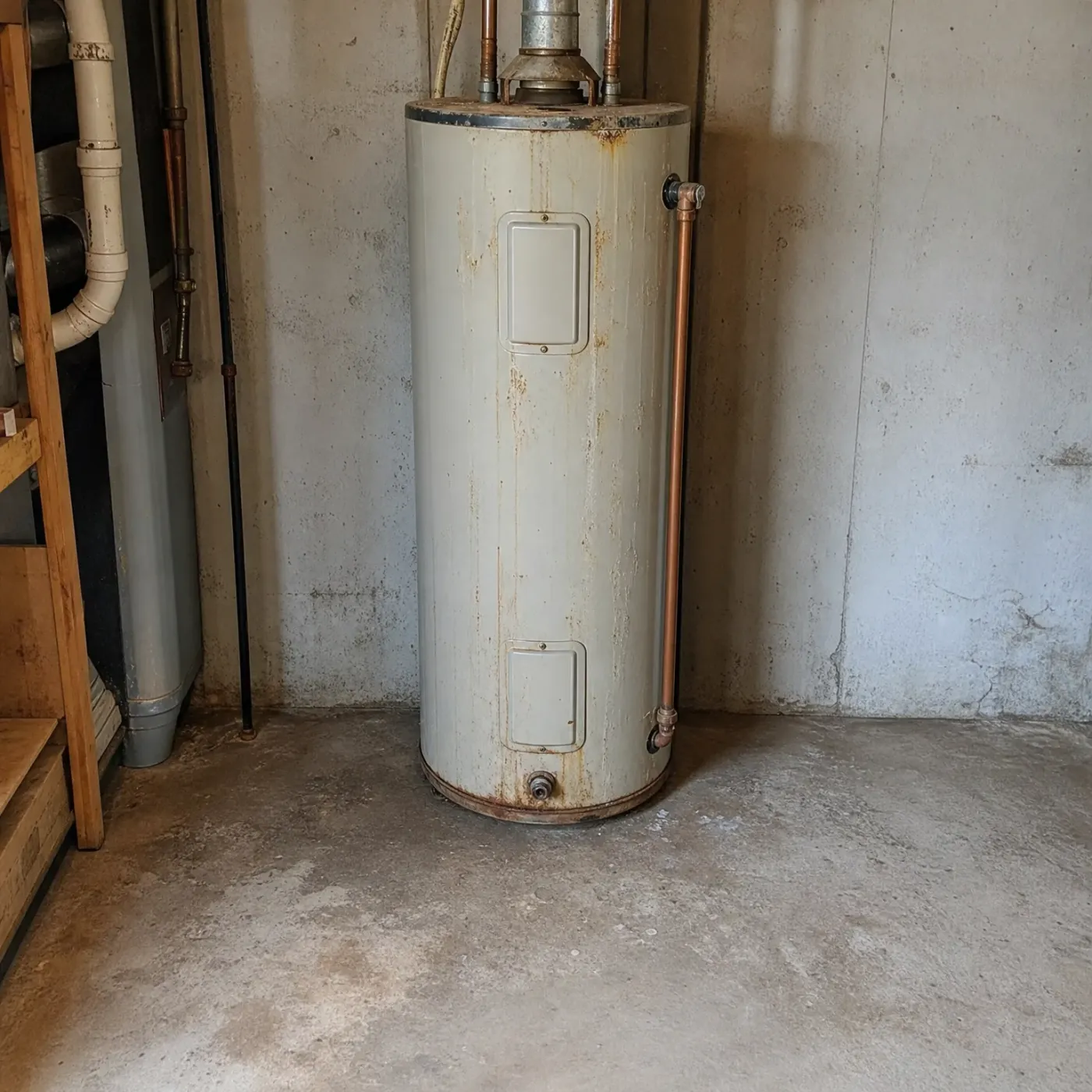
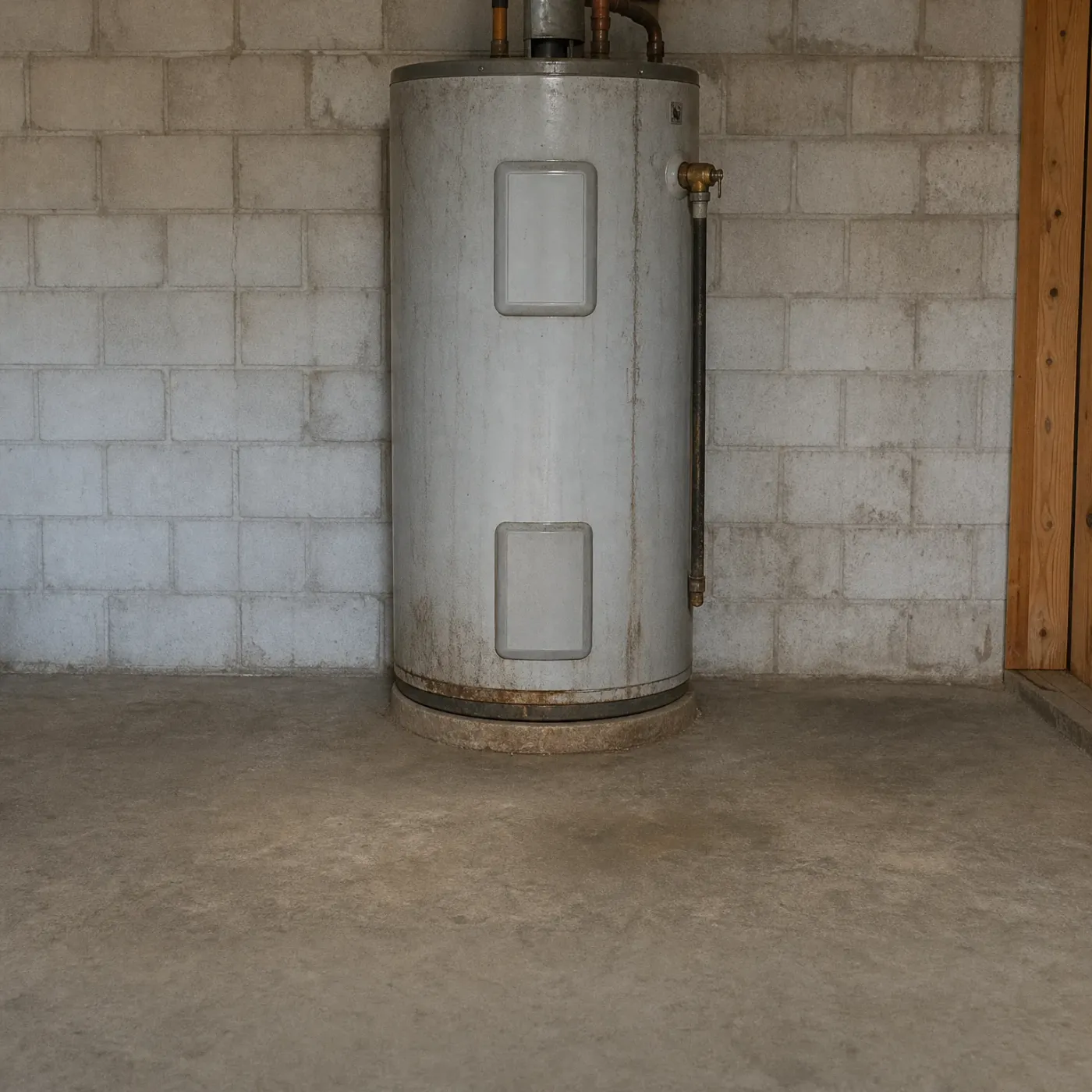
A rusted cream-colored water heater with copper piping and a flue stands in the corner of a concrete-walled basement next to wooden shelving and ductwork.

What a water heater looks like near the end

Rust spreads across the tank wherever it's been sweating, and the metal underneath starts to pit. Once you see corrosion like this on the tank itself, not just the fittings, it's usually failing from the inside and a repair won't hold. A local contractor who installs these every week can tell you fast whether it's worth replacing before it leaks, instead of you waiting on a call back from someone across town.

A gray-haired man in a dark sweater sits on a light gray sofa in a living room, looking toward a sunlit window with trees outside.
A gray-haired man in a dark blue sweater sits on a light gray sofa in a sunlit living room, looking off to the side, with a potted plant, shelving unit, and large glass doors behind him.
A bearded man with graying hair in a dark green sweater sits on a sofa in a living room, looking off to the side, with a sliding glass door and a dim kitchen doorway behind him.
A gray-haired man in a dark knit sweater sits on a light gray sofa in a living room, looking toward a sunlit window, with houseplants, a lamp, and framed art in the background.
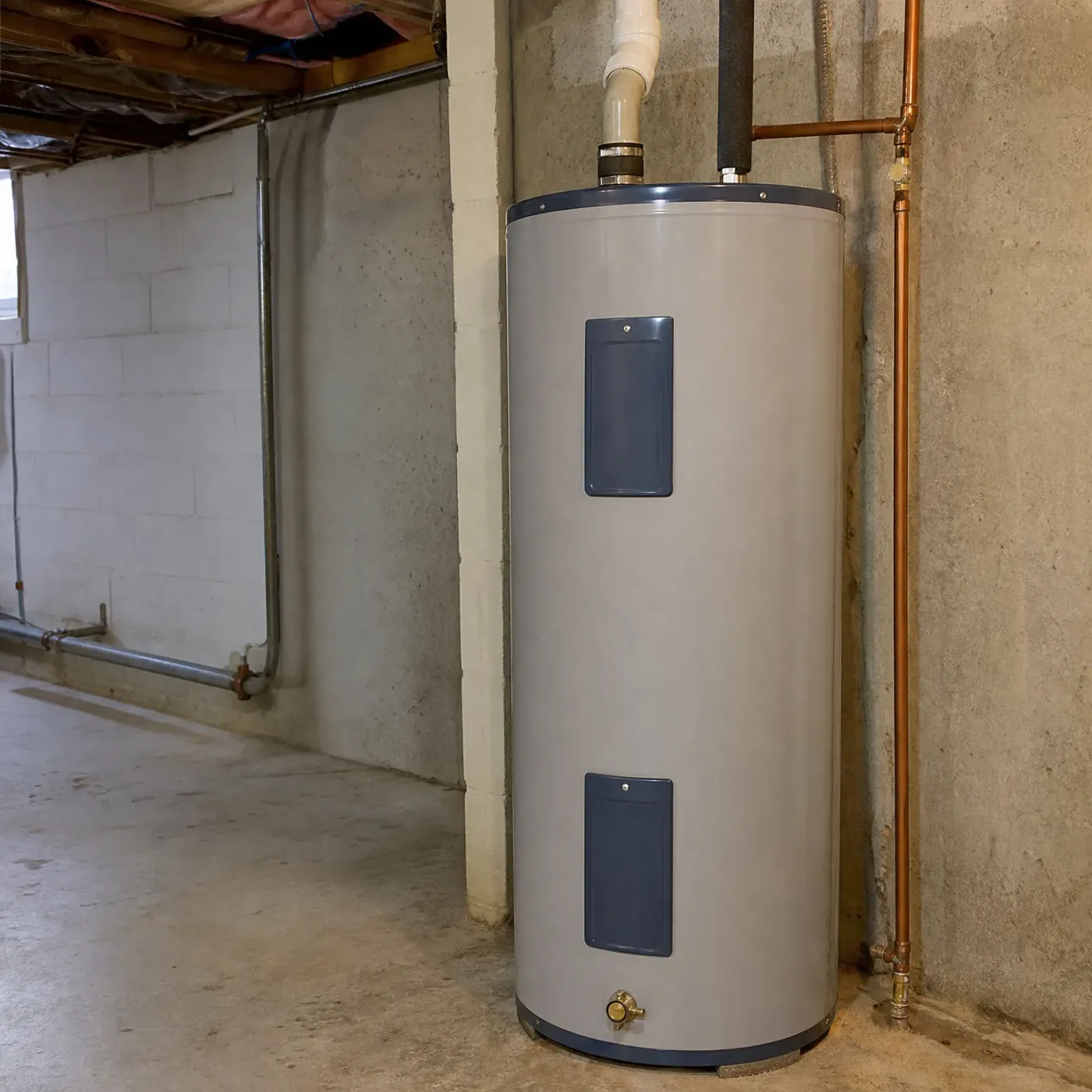
A tall gray cylindrical water heater stands in a basement corner against concrete block walls, with copper and metal pipes running along the wall and a vent pipe at its top.

Skip the search

One installer gets your project, so there's no bidding war over it.

Describe the project once instead of to every installer.

Skip the calls

You're not committing to anything by asking.

Is your water heater trying to tell you something

Walk past the tank and listen. A low rumble or popping sound means sediment has built up on the bottom and the heater is working around it. Check the water temperature too. If it's gone lukewarm, or runs hot then cold partway through a shower, the heating element or thermostat is struggling. Look at the floor around the base and the pipe coming off the relief valve. Any dampness there, even if it dries between checks, usually means a seal or fitting is failing before the tank itself goes. Left alone, a slow leak soaks the subfloor underneath it, and by the time the tank splits open you're dealing with water damage on top of a water heater that needs replacing anyway.

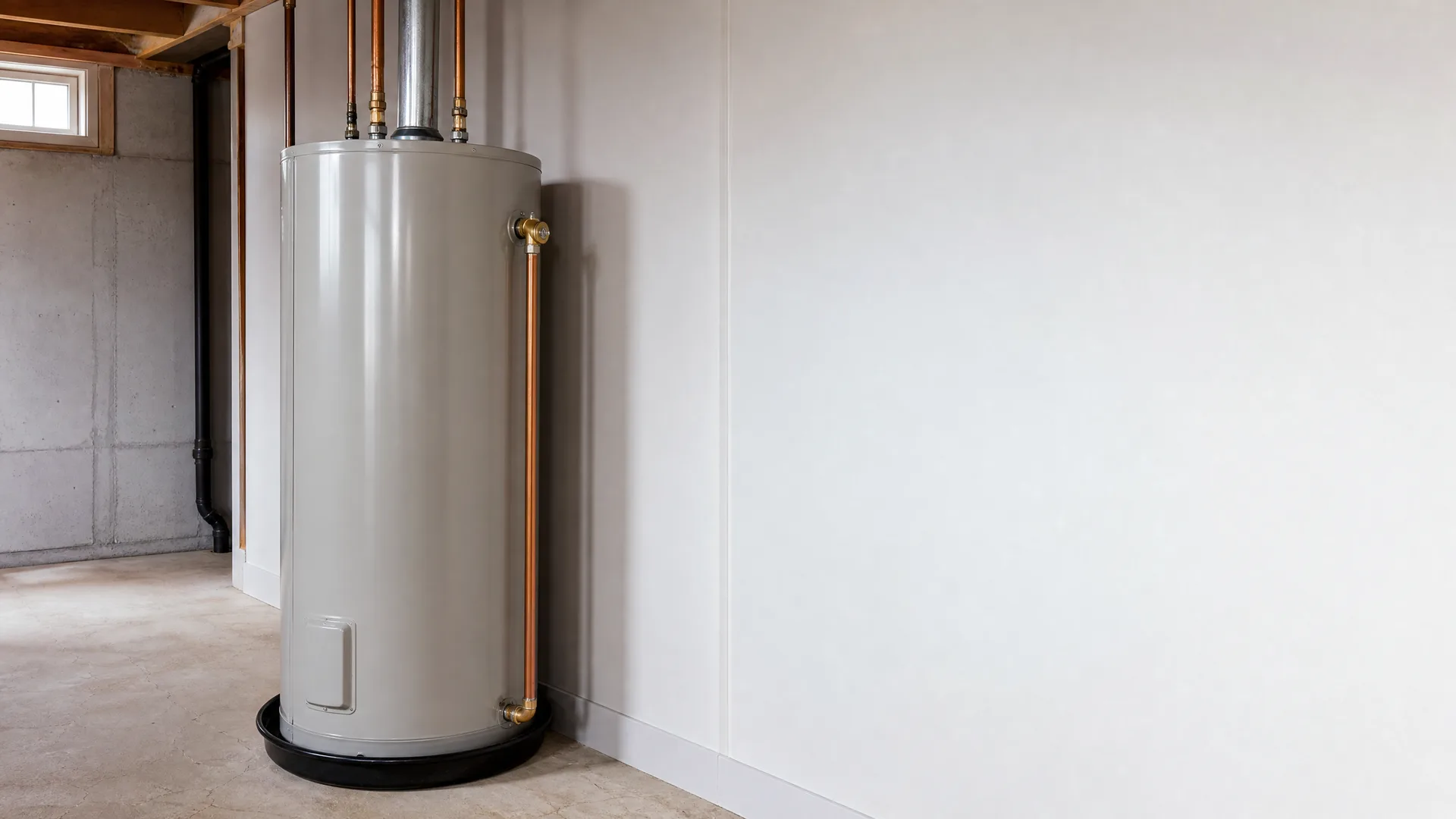
A beige cylindrical water heater with copper pipes and a black drain pan stands in a corner of a basement with white walls, a concrete wall and small window at left, and a concrete floor.

Why the anode rod matters

Every tank water heater has a metal rod inside that corrodes so the tank itself doesn't. It's magnesium or aluminum, and it draws the rust to itself first. Once it's used up, the tank's steel wall is next in line, and in Florida's water that happens faster than in places with milder water and milder weather. A rod that's still doing its job is the difference between a tank that lasts years and one that starts leaking well before 8 years.

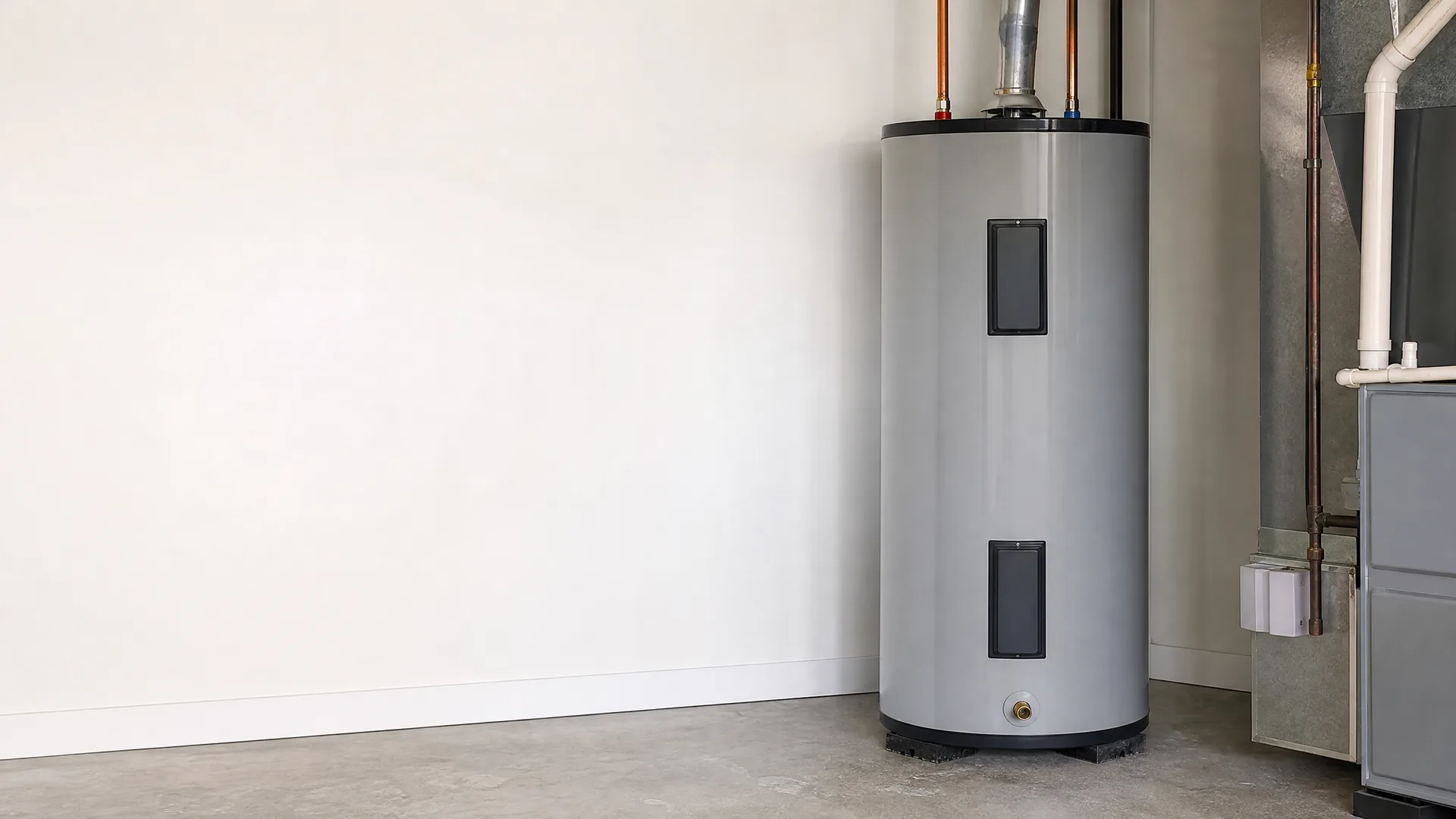
A gray cylindrical water heater with two black access panels stands on a concrete floor against a white wall, with copper pipes and a flue above it and ductwork to the right.

What the thermostat setting costs you

A thermostat set past 120 degrees makes the heating element work harder and shortens its life, and it also speeds up mineral buildup on the bottom of the tank. In a state where the incoming water is already warm most of the year, there's less reason to run it hot. Dropping it a few degrees doesn't just lower the power bill, it eases the load on the parts that fail first, the element and the rod.

Why does my water heater only last 8 years in Florida?

You keep seeing 10 to 13 years quoted as the normal life of a water heater, but the one in your utility room didn't make it past 8. You want to know what's actually cutting the time short, not just that Florida is hot.

Hot water and hot ground both push the tank harder

A tank heats incoming water up to the set temperature and holds it there, cycling the heating element on and off as the water cools. In Florida, the ground and the water coming into the house are already warmer than in a cooler state, and the air around the tank runs warmer too if it sits in a garage or utility closet. The element and the thermostat still work the same, but they're cycling against a higher baseline all year, since there's no stretch of cold months where the tank gets a break. That steady load adds up faster on the anode rod and the tank lining, which is why the same unit that might run 10 to 13 years up north tends to give out closer to 8 here.

A cylindrical water heater with two access panels and copper pipes stands on a concrete floor against a painted concrete block wall.
Before you get your water heater installation
A white cylindrical water heater on a concrete pad in a basement, with copper and metal piping above it and a gray furnace cabinet with ductwork to the right.
After you get your water heater installation

90.4% of homes statewide heat with electricity

Nine out of ten Florida homes heat water with electricity, yours likely included. That means its lifespan rides on the heating element and anode rod inside the tank, not a gas burner, so the wear pattern is different from what you'd read about elsewhere.

ACS 2020-2024 5-year B25040

A middle-aged woman with shoulder-length dark hair, wearing a gray cardigan over a cream top, sits in an upholstered armchair and looks toward a sunlit window, with a shelf holding framed pictures and a plant behind her.
A woman and a child wrapped together in a knitted gray blanket on a couch, with the child's head resting on her shoulder and a lit table lamp and houseplant in the background.
A closed silver laptop and a glazed ceramic mug on a wooden table, with a blurred kitchen counter, potted plant, cutting board and window in the background.

Where that leaves you

Plan on 8 to 10 years out of a water heater in Florida, and check yours against the signs already covered: rust on the tank, a rumble from sediment, water that won't get hot. None of that means wait until it floods the utility room. Once a tank starts showing its age, replacement on your schedule beats replacement on its.

Finding someone for the job is its own chore, normally. Looking up contractors, calling a few, walking each one through the same details about your tank and your utility room, then sitting on quotes trying to tell them apart. Submit the request here and that part is done. You're matched with one licensed, local contractor who installs water heaters in homes like yours all year and knows what Florida's heat and humidity do to a tank, so you're not explaining it twice.

Interior corner of a living room with a beige upholstered sofa and dark cushion in the foreground, a ceramic vase of leafy branches on a dark side table by a curtained window, a framed picture on the wall, and a wood-surround fireplace at right.
A gray cylindrical water heater with copper pipes stands against a concrete wall in a dim basement, with a bare hanging light bulb and a metal shelving unit at right.

Explain it one time

The pro who reaches out is licensed in Florida.

Step 1 of 3: Equipment