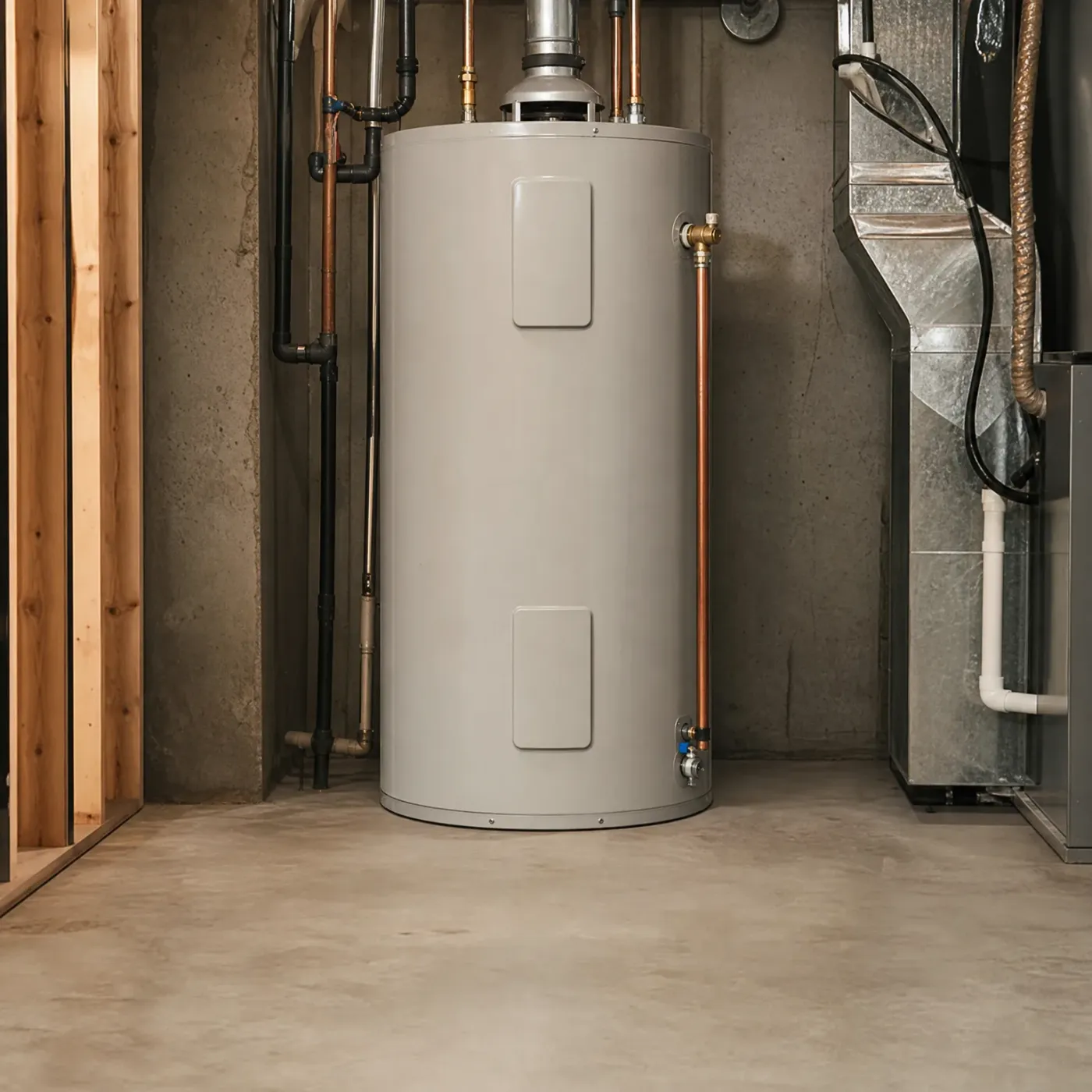
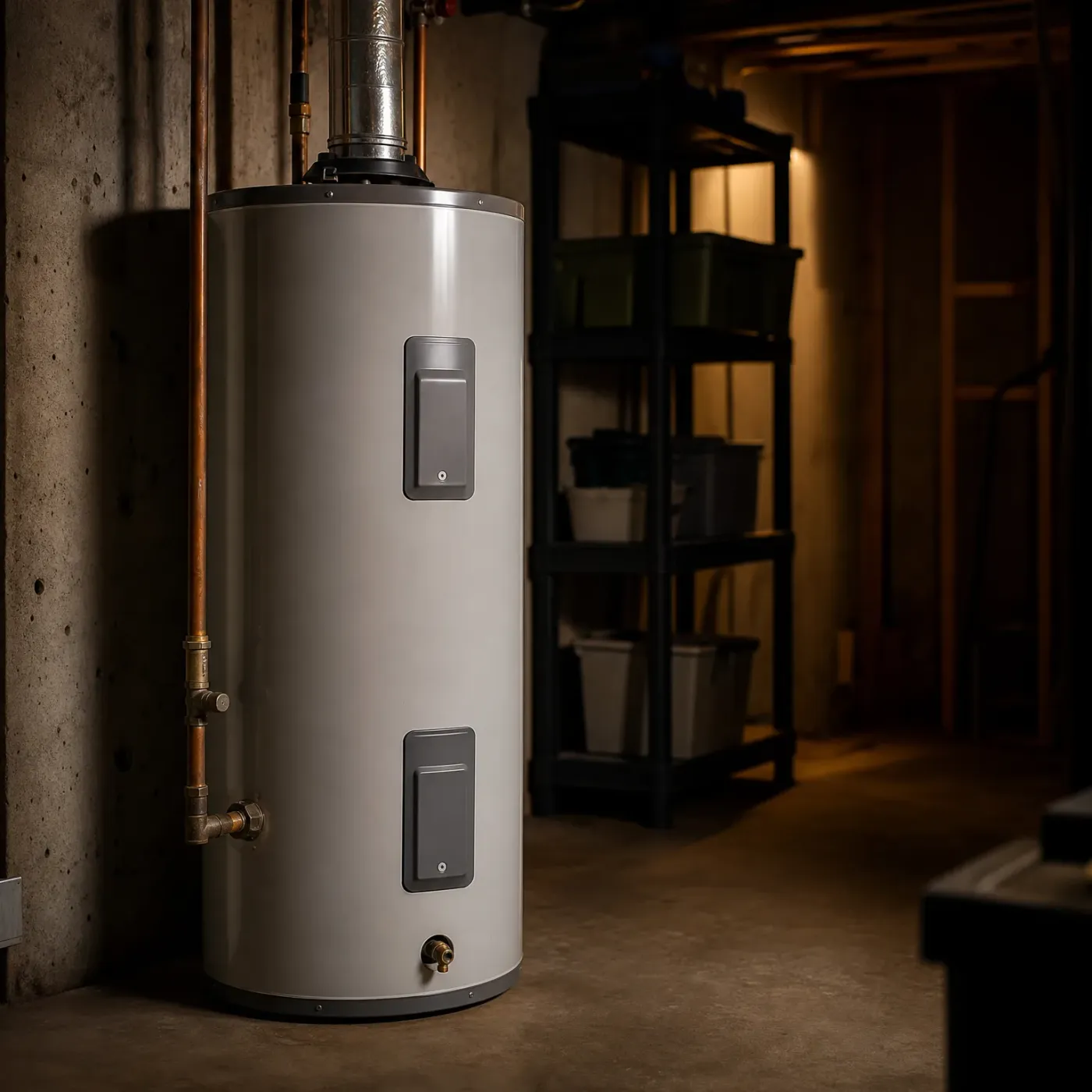
A tall cylindrical water heater with a metal flue pipe and copper plumbing stands against a concrete wall in a dim basement, with a black shelving unit holding plastic storage bins nearby.

A pro who works on water heaters

What size water heater a Florida home needs

Right size matters more here than the brand or the price tag. Too small and you run out of hot water with two showers running back to back. Too big and you pay to keep water hot you don't use. Household size, your bathrooms, and your electric rates all factor in. Answer those and a contractor who installs water heaters in your area can size the job and reach out.

Connect with a pro

For most Florida homes, that means a 40 to 50 gallon tank if you're on electric, which most homes here are. A household of two or three usually does fine with 40 gallons. Four or more people, or a house with a soaking tub or two bathrooms running showers back to back, calls for 50. Electric water heaters recover slower than gas, so the tank has to hold more of what you need up front rather than counting on quick reheating between uses. Florida's incoming water runs warmer than it does up north, which helps an electric tank keep up, but it doesn't change how many gallons a family actually draws down in a morning. Get the size wrong and you either run cold water into a shower that was supposed to be hot, or you pay every month to keep gallons hot that nobody uses. A contractor sizing your install will look at your household and your fixtures, not just the tank that's already there.

A gray cylindrical water heater with copper piping and access panels stands against a concrete basement wall beside ductwork and vertical pipes.
A water heater sized right keeps up quietly, running hot water to both bathrooms without the tank falling behind.
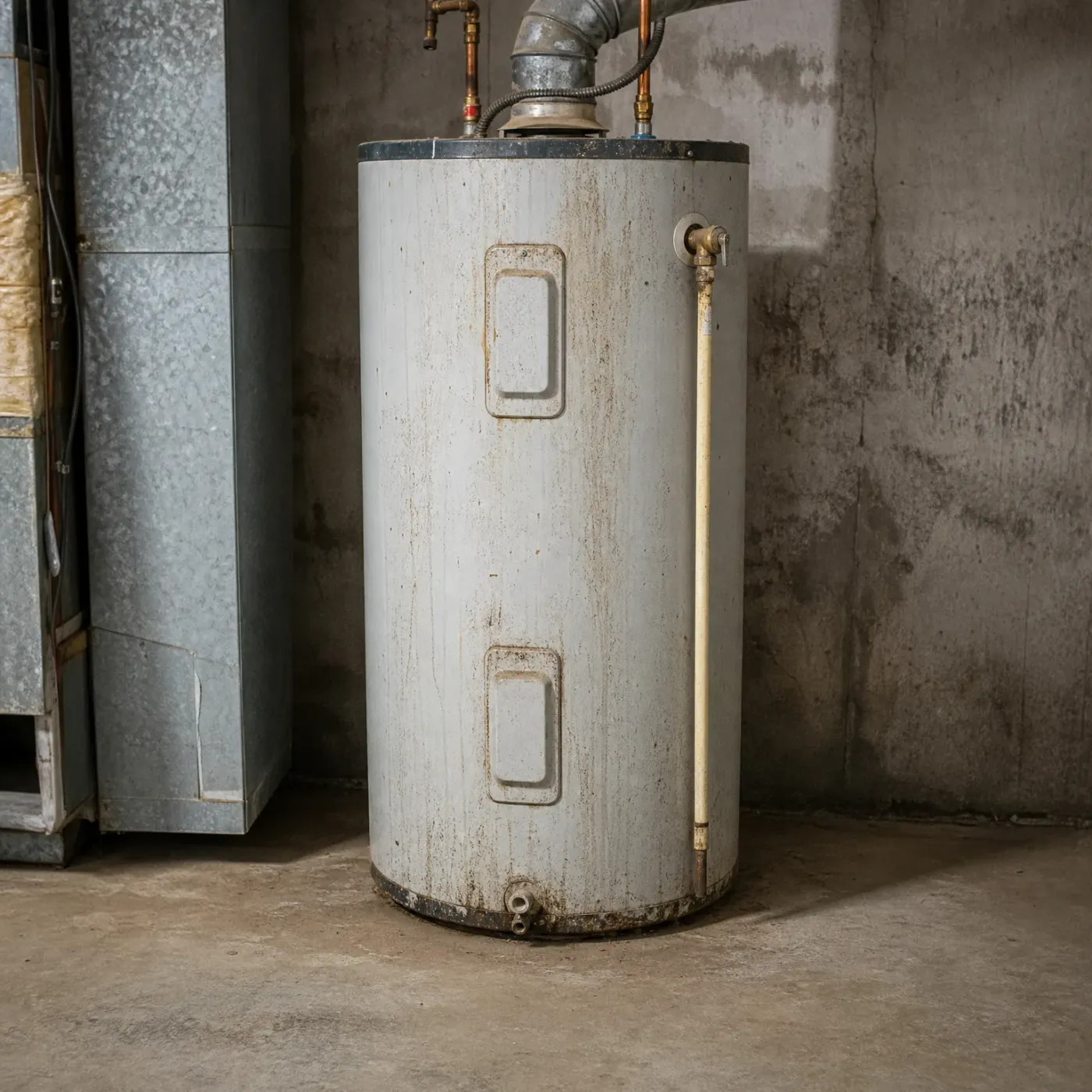
An old rust-streaked cylindrical water heater with two access panels, copper pipes and a flue at the top, and a discharge pipe along its side, standing on a concrete floor beside galvanized ductwork against a bare concrete wall.
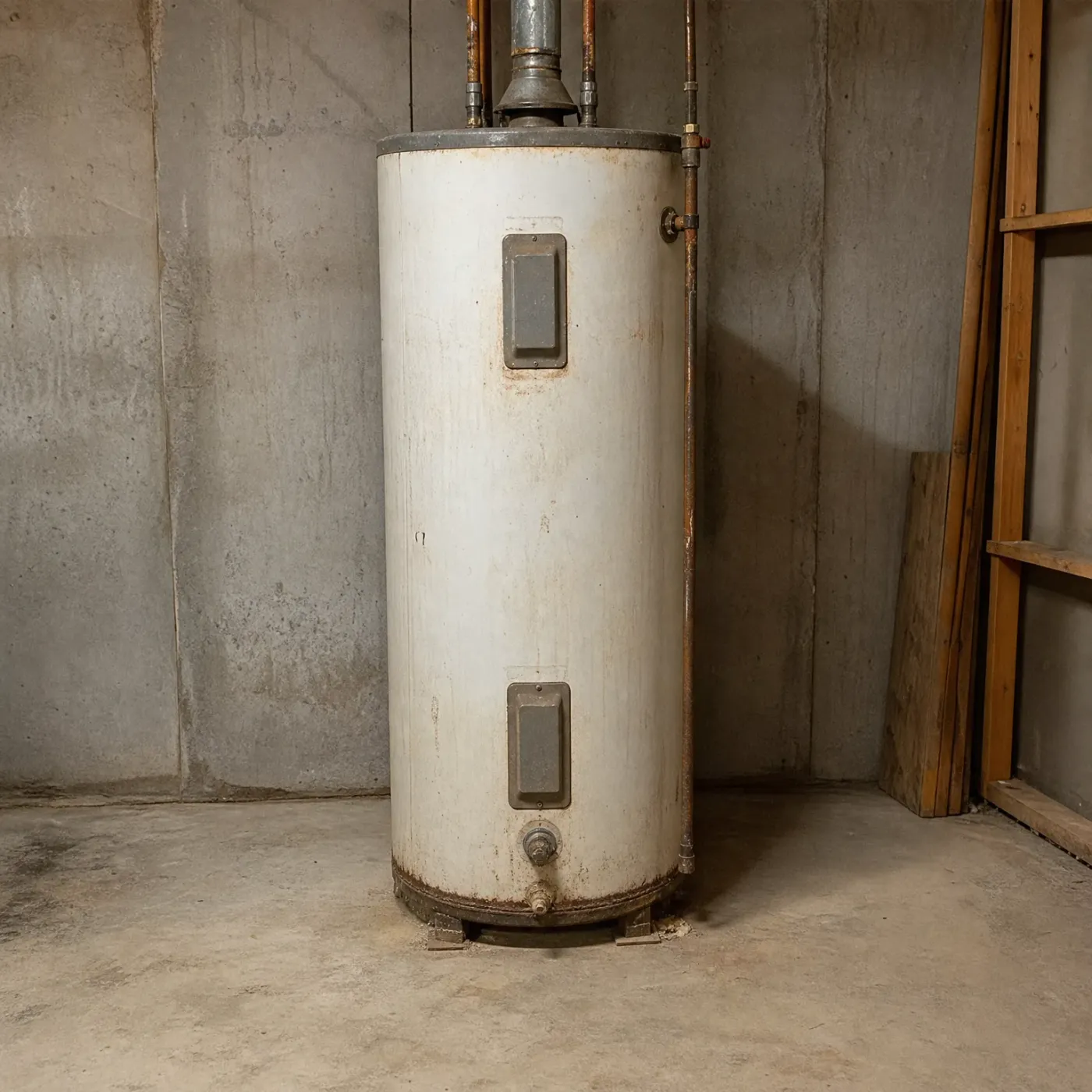
Rust on the tank and corrosion at the fittings mean the unit is failing on its own terms, not because it was sized wrong.

An electric water heater works from two elements, not one. The bottom element does most of the job once the tank is full, since the top one only kicks in when cold water has just come in and needs a head start. What matters for your house is recovery, how fast that bottom element can bring a full tank back up to temperature after someone showers. A fast recovery means the next person in line still gets hot water. A slow one means they don't, no matter what the tank size sticker says. That sticker is optimistic anyway. A 50 gallon tank doesn't hand you 50 gallons of usable hot water, because the top third starts mixing with cold the moment you turn a tap on. Inside, a dip tube keeps incoming cold water down at the bottom so it doesn't disturb the hot water sitting at the top. An anode rod does its own quiet job, corroding in place of the tank so the steel doesn't rust through. And the thermostat, usually set to 120 degrees at the factory, is probably still right where it was the day the installer left.

How an electric tank actually heats

  • Electric tanks heat with two elements, one near the top and one near the bottom, and the bottom one does most of the work once the tank is full.
  • Recovery is the rate the tank reheats water after a draw, and it's what actually decides whether the next shower runs hot or cold.
  • A tank marked 50 gallons never delivers a full 50 gallons of hot water, since the top third mixes with incoming cold as soon as you start drawing.
  • The thermostat on an electric water heater is set at the factory, usually around 120 degrees, and most never get adjusted after install.
  • A dip tube feeds cold water to the bottom of the tank so the heated water at the top stays undisturbed until you call for it.
  • An anode rod inside the tank corrodes on purpose, sacrificing itself to keep the steel tank from rusting through.
A smiling older woman with gray hair in a cream knit sweater stands in a dimly lit kitchen beside a window showing snow outside, with a round loaf of bread on the counter in the foreground.
A woman and a child wrapped together in a thick knitted blanket on a sofa, both with eyes closed, with a lit table lamp and houseplant in the dim background.

Get your water heater to the right pro

Send the form and stop researching installers for the new water heater.

No fee to send it, and nothing to sign.

An electric tank's first hour rating matters as much as its total size, since that number tells you how much hot water it can actually deliver when demand hits all at once.

Two 50 gallon tanks can carry different first hour ratings depending on element wattage, so the gallon number alone doesn't guarantee the household it's sized for won't run cold.

A rusted white cylindrical water heater with two access panels stands in a concrete-walled basement corner, with pipes rising from its top and wooden boards leaning against the wall at right.
Before you get your water heater installation
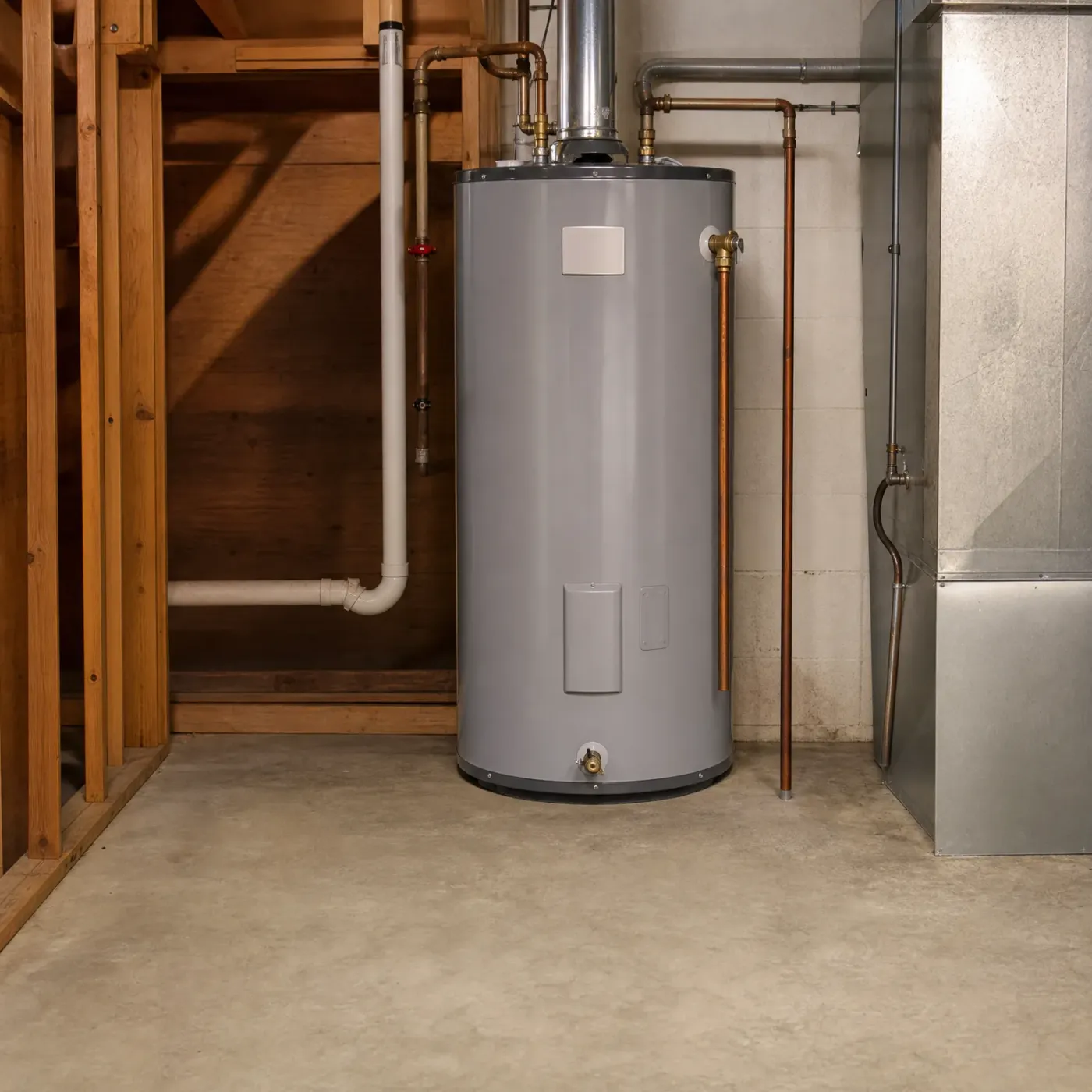
A gray cylindrical water heater stands on a concrete basement floor between an unfinished wood stud wall and a metal furnace duct, with copper and PVC pipes running along the concrete block wall.
After you get your water heater installation

Undersized

The tank runs out partway through the second shower. Someone's rinsing in cold water while the elements race to catch up, and in a full house that happens most nights.
Get my match

Oversized

The tank holds more hot water than your house uses, and both elements cycle to keep all of it hot, which shows up on your electric bill every month.


Get my match
A woman with long blonde hair in a light blue shirt leans back on a beige sofa with her eyes closed, in a softly lit living room with cushions and a blurred plant and shelf in the background.
A woman with long dark hair in a gray knit sweater sits on a gray sofa with a cushion, looking toward a window in a living room with framed pictures and a lamp in the background.
A woman with long dark hair in a light grey knit sweater sits on a sofa indoors, looking to her right, with a framed landscape picture, a potted plant and a curtained window behind her.
A woman with long dark hair leans back against a gray sofa with her eyes closed, in a living room with a curtained window, a potted plant, and a dark screen in the background.
  1. Cold water enters the tank through the dip tube at the bottom.

  2. The lower element heats the bulk of the tank first.

  3. The upper element finishes heating water near the top outlet.

  4. A thermostat on each element cycles it off at set temperature.

90.4% of homes statewide heat with electricity

With electric water heaters in almost every Florida home, sizing comes down to the two elements and your tank's recovery rate, not gas burner output like other states plan around. Your rates stay typical here, so the cost of running those elements isn't the issue. Getting the gallons and first hour rating right for your household is.

ACS 2020-2024 5-year B25040

A man in a dark blue shirt stands in an open front doorway of a stucco and wood-clad house, facing a blond woman seen from behind in the foreground on a stone walkway.

The right size comes down to your household, not the brand

A 40 to 50 gallon electric tank covers most Florida households, with the exact number set by how many people live there and how many showers run back to back. That's the whole answer. Getting it right means hot water keeps up on an ordinary night without the elements running longer than they should.

If you're not sure which end of that range fits your house, that's a sizing question worth getting right before a new tank goes in. Answer a few questions about your home and you'll be matched with a contractor who installs water heaters in Florida homes like yours, and they'll reach out to work out what size fits. From there, sizing it correctly isn't something you have to figure out alone.

Interior corner of a dining room with a round wooden table, a ceramic vase holding olive branches, a dark spindle-back chair near a curtained window, and a sideboard with a lamp against beige walls.
A single-story stone-clad house with low-voltage path lights along a gravel bed and lawn at dusk, with a tree line and orange sky on the horizon.

Water Heater Installation

Matched to your water heater job

Step 1 of 3: Equipment
  • A cream chunky cable-knit throw draped over a beige upholstered armchair beside a bright window, with a wooden side table holding a book and a vase of leafy branches at left.
    • Describe your water heater job, and a local pro who handles it gets in touch.
    • Say what's going on with your water heater, and a pro who works on them reaches out.
  • Living room corner with a gray sofa holding beige pillows and a knit throw, a round wooden coffee table with a dark planter and shallow bowl, a jute rug, a floor lamp, a framed landscape print on the wall, and a window showing trees.
    • After this form, you can stop searching for a water heater pro.
    • One request and the search for a pro is handled.
  • A living room corner with a cream sofa and cushion, knit throw, wooden coffee table holding a shallow bowl and dark ceramic vase with green foliage, a floor lamp, potted plant in a woven basket, and linen curtains at a window.
    • Skip the round of in-home estimates for a new water heater.
    • Describe the project once instead of to every installer.
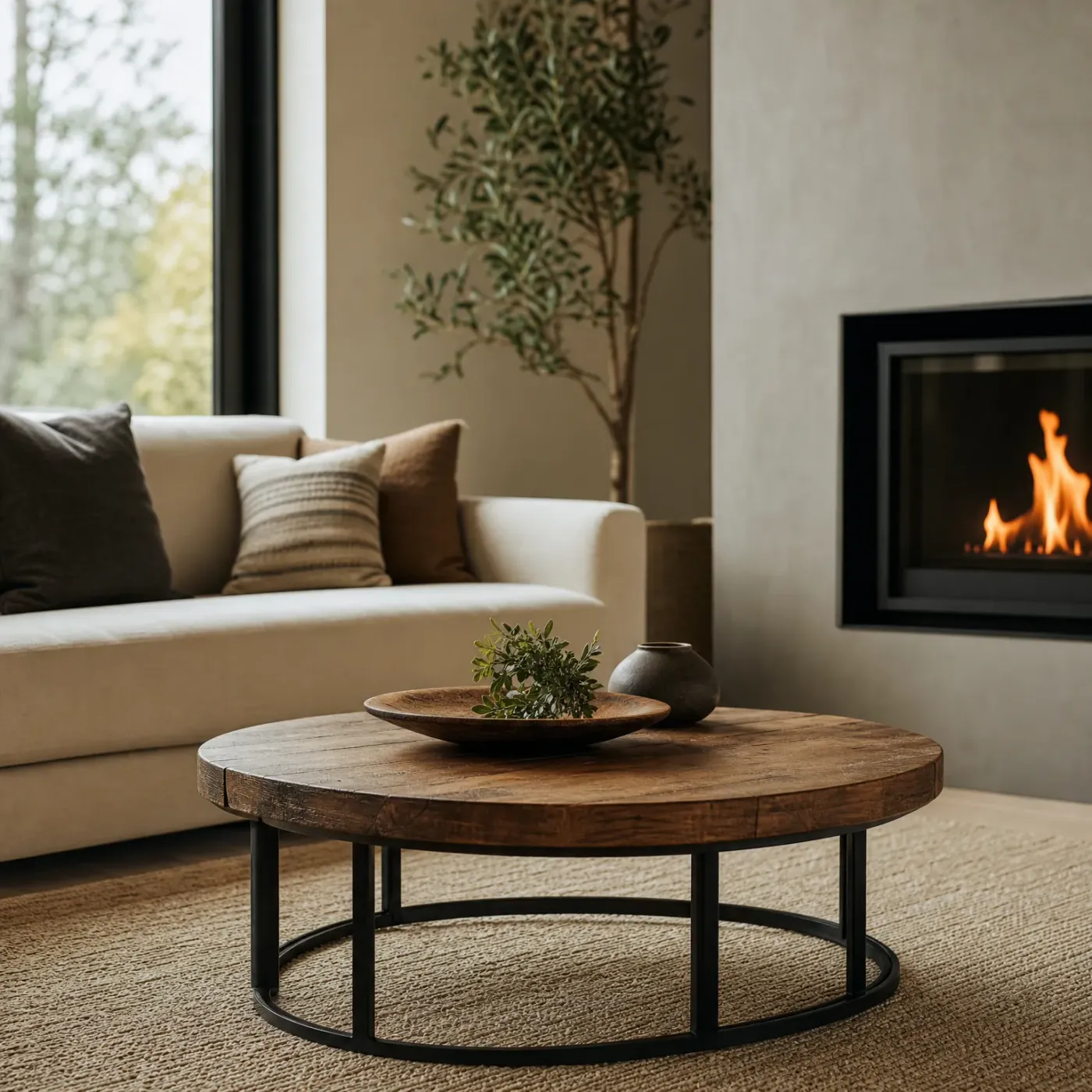
  • A round reclaimed-wood coffee table with a black metal base sits on a woven rug in front of a cream sofa with cushions, with a lit built-in fireplace and a tall indoor tree in the background.
    • One installer gets your project, so there's no bidding war over it.
    • Only one pro gets your request, so you hear from one company.