Profile view of a bearded man wearing a dark green baseball cap and a dark gray T-shirt against a plain light background.

Why your hot water is lukewarm in Florida

Step 1 of 3: Equipment

Why is my hot water lukewarm instead of hot in Florida?

You turn on the hot water and it never quite gets there. It is warm enough to notice but not enough to shave or rinse a pan clean. You checked the breaker, nothing tripped. The water heater is running, just not keeping up, and you want to know what is actually wrong before it turns into a cold shower.

A heating element or thermostat inside the tank has failed

Most homes in Florida heat water with electricity, and an electric tank uses two heating elements, one near the top and one near the bottom. When one fails, the other keeps working, so you still get warm water, just not hot water. The thermostat that controls either element can also drift or fail the same way, telling the tank it has reached temperature when it hasn't. Either problem lets the tank keep running without ever heating the water fully, which is why the breaker never trips and nothing looks wrong from the outside. A failed lower element is the more common cause, since it does most of the work heating the incoming cold water.

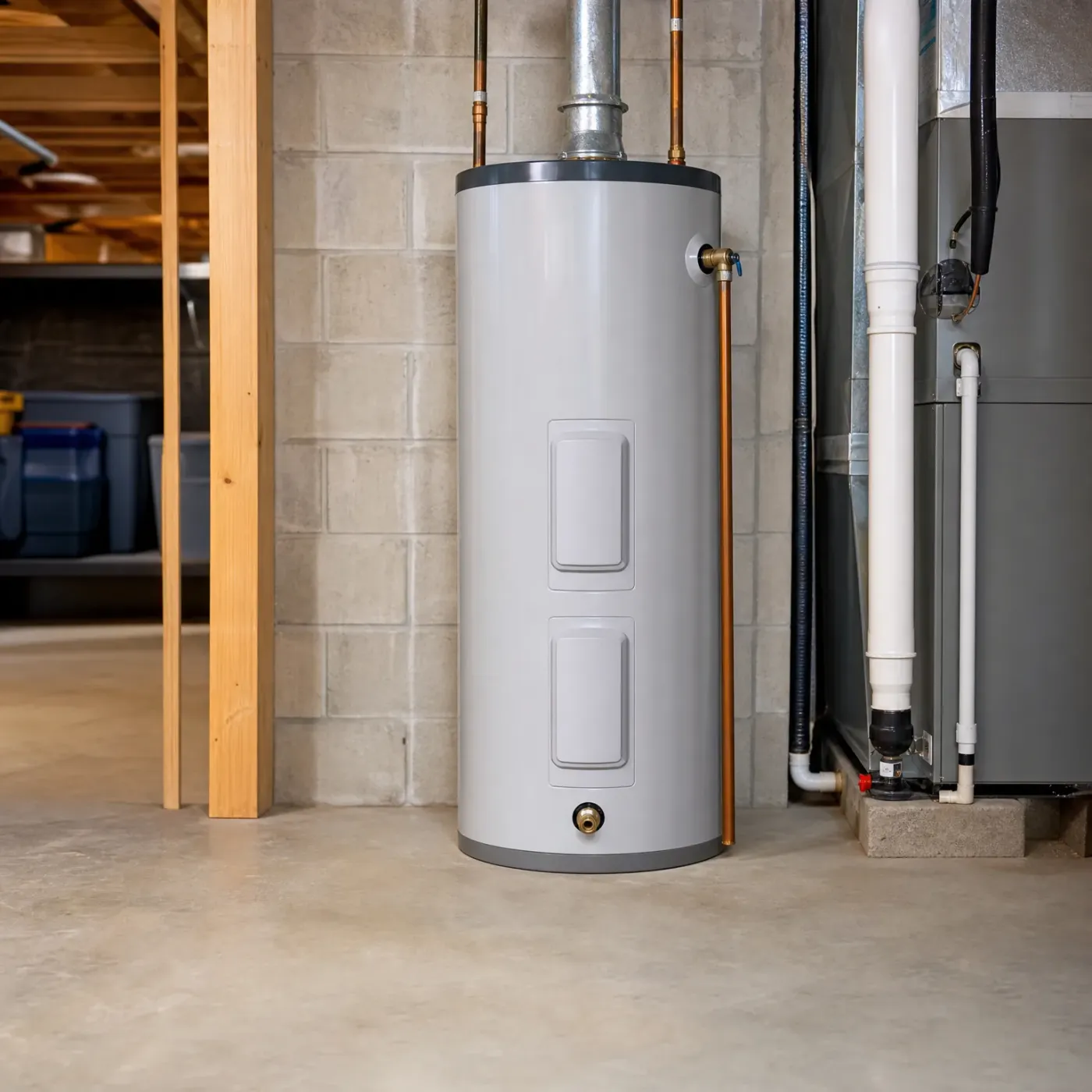
A gray cylindrical water heater with copper pipes stands against a concrete block wall in a basement, next to white PVC piping and a gray furnace, with wood framing and storage bins at left.

Heating element still working

Most Florida homes run electric water heaters with two heating elements. If the bottom one fails, the top one still heats the water near the outlet, so you get warm water instead of cold. The tank looks and sounds normal, which is why the problem gets missed for weeks.
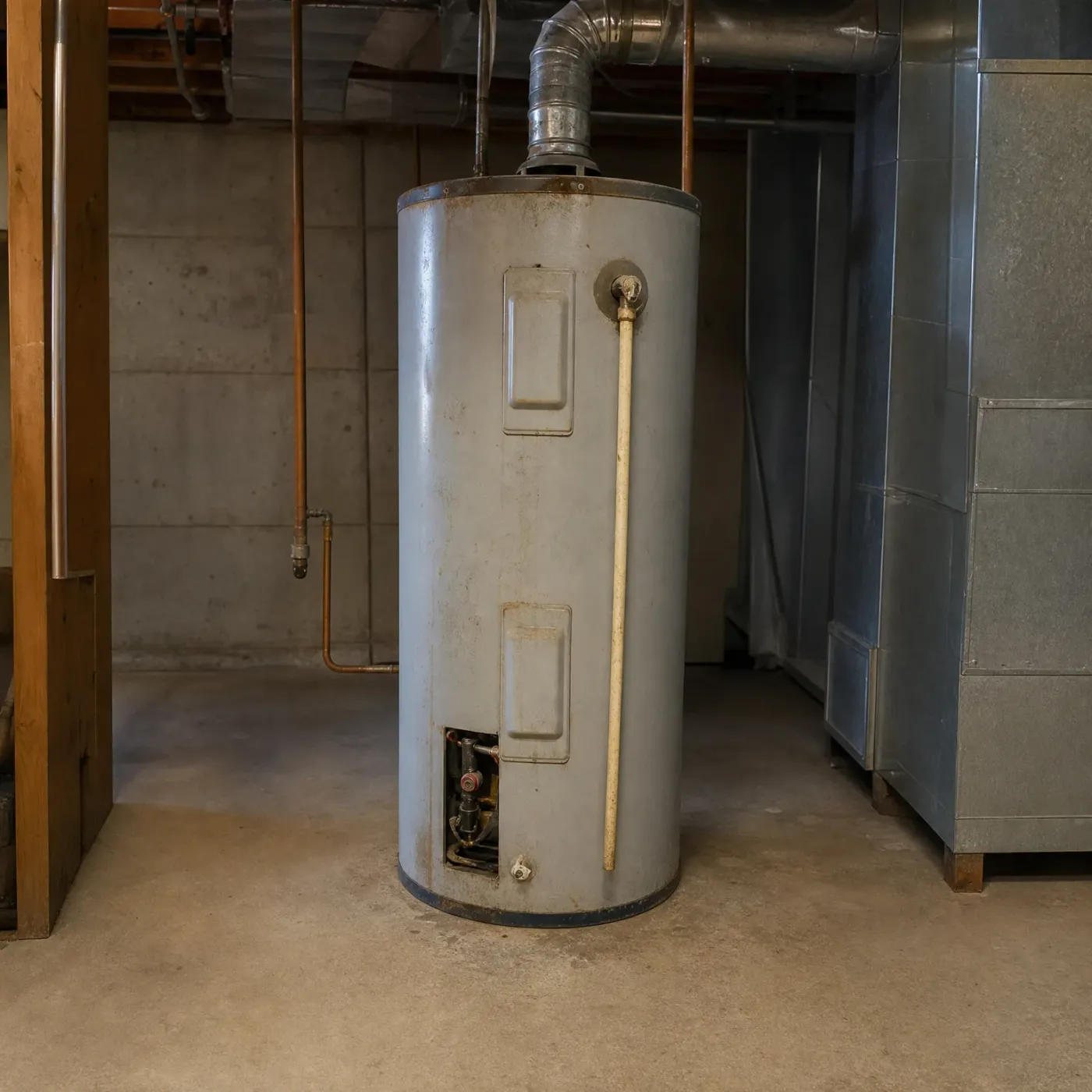
An older gray gas water heater with a metal flue pipe stands on a concrete basement floor beside ductwork and exposed copper piping.

Tank past its years

Rust on the tank, a corroded flue connection, or a relief valve that weeps water are signs the tank itself is wearing out. A unit in this shape may heat less water each cycle or lose heat faster than it used to, leaving you with less hot water than the setting calls for.

Is this just how your shower is now

You've started running the hot side all the way and still cutting showers short. Dishes don't quite get clean because the water cools before the grease does. Laundry on warm comes out closer to cool. If anyone in the house waits for someone else to go first, hoping the water builds back up, that's worth noticing too. A tank that's only half heating still runs the same amount of electricity through it, so you can end up paying close to the full price for half the hot water. Left alone, the element that's still working is carrying load it wasn't meant to carry by itself, and it can wear out faster because of it.

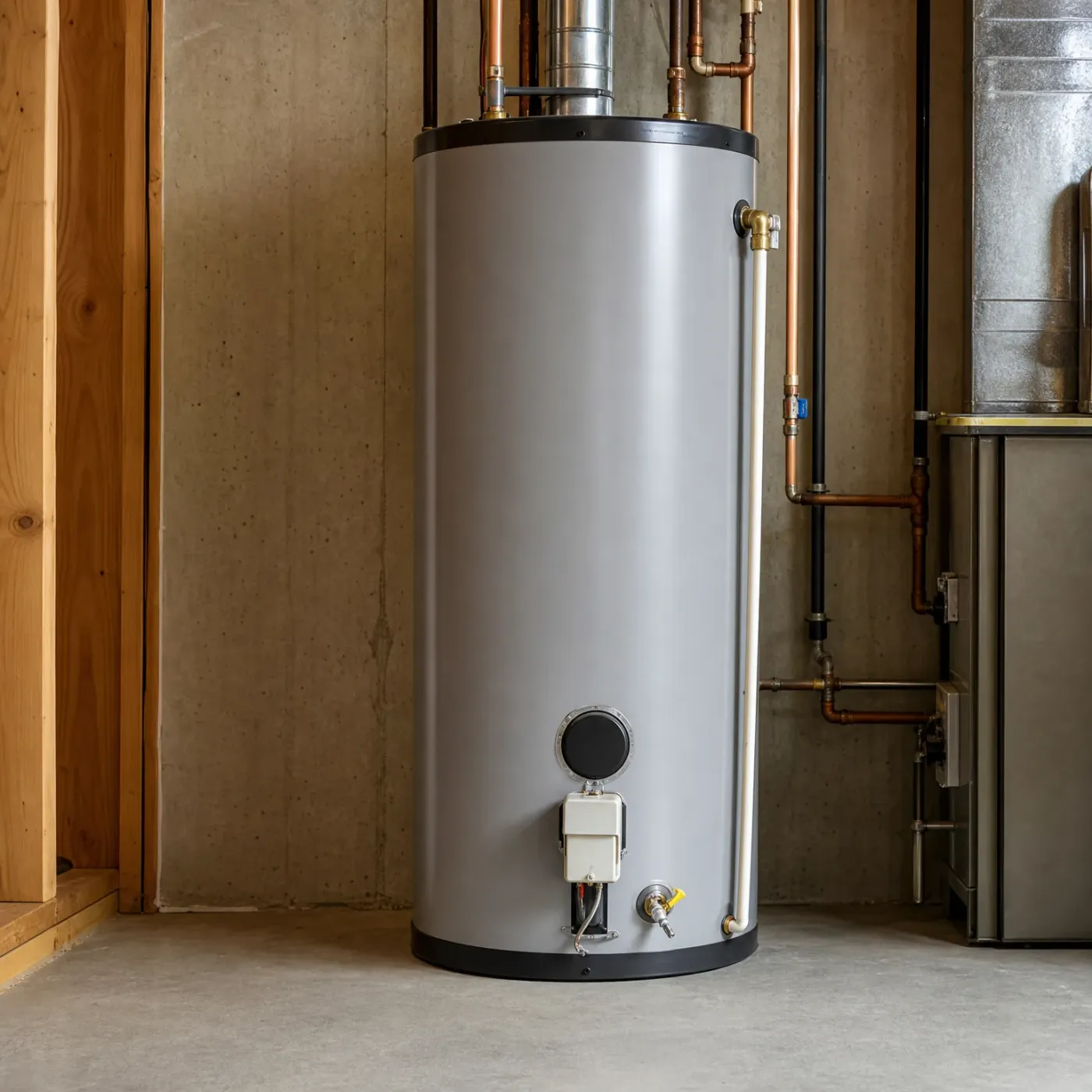
A gray cylindrical water heater stands on a concrete floor against a concrete wall, with copper and black pipes running overhead and a metal duct and dark equipment cabinet to the right.

Working the way it should

A gas water heater like this holds up fine for years with no trouble. The tank is clean, the flue vent is solid, the gas valve and copper lines show no wear. Lukewarm water from a unit in this shape usually traces back to a thermostat or a dip tube, not the tank itself.

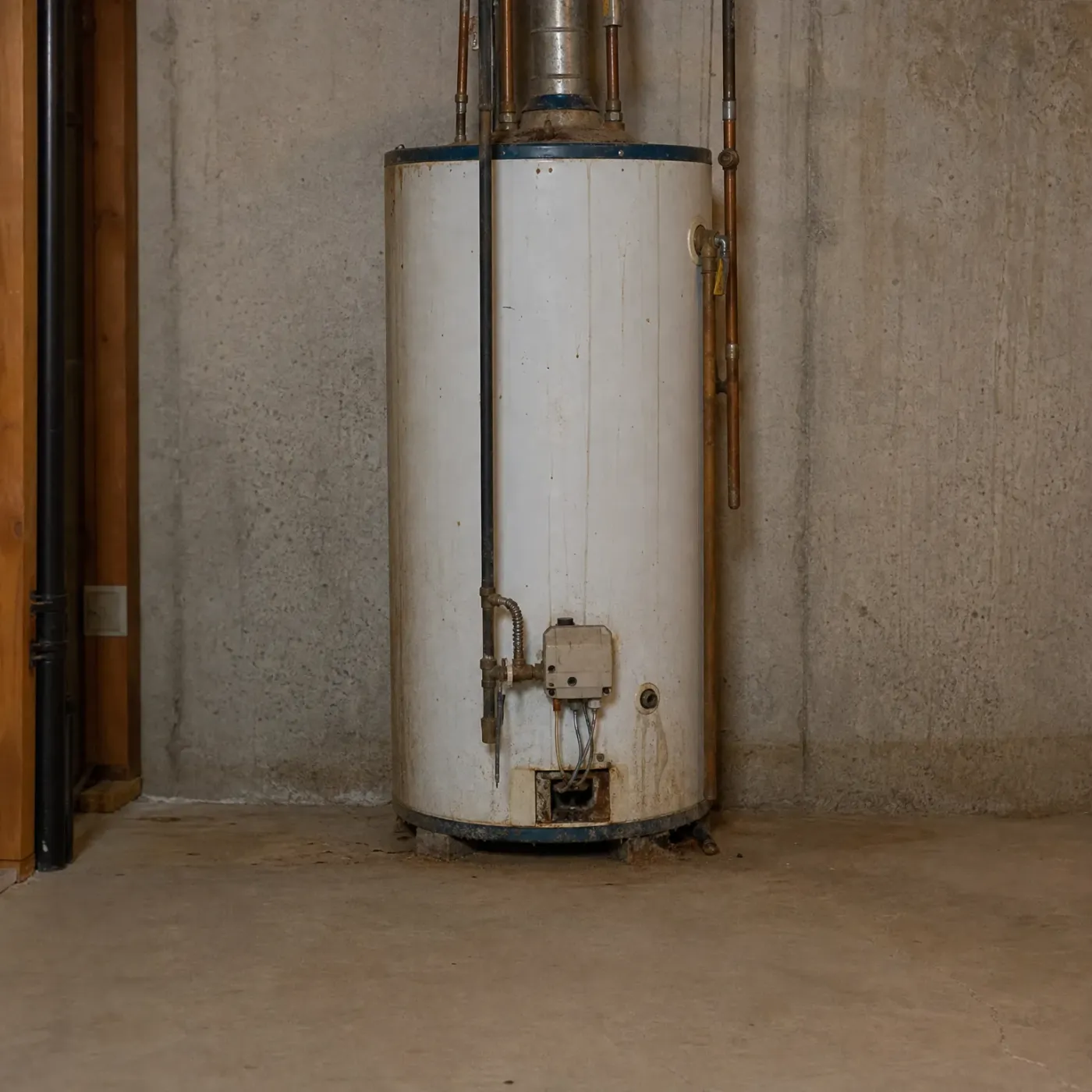
An old white gas water heater with rust stains, copper pipes and a flue stands in the corner of a concrete-walled room with a bare concrete floor and a wooden door frame at left.

Age catching up with it

Rust stains down the side, a corroded flue pipe, paint worn off the tank. A water heater that looks like this has likely been struggling for a while before the hot water turned lukewarm. Once rust shows on the outside, the inside has usually been corroding just as long.

A closed dark laptop and a ceramic mug of coffee on a wooden dining table, with wooden chairs, a dark kitchen cabinet with cutting boards and a potted plant, and a leafy plant by a window in the background.

What's actually happening inside the tank

A bottom element that's failed doesn't just stop heating. It can short and trip the high limit switch, which then shuts off the top element too, and you get no hot water at all instead of lukewarm. More often the bottom element is just worn down, drawing power but not producing enough heat, while the top element keeps cycling on normally. That's why the water comes out warm instead of cold or hot. A thermostat that's drifted off calibration does something similar: it tells the element to stop heating well before the water reaches the set temperature, so the tank never gets past lukewarm no matter how long you wait.

Either one takes a meter and a look inside the access panel to tell apart, not guesswork from the faucet. Once you send the form, you're done hunting through listings and reading reviews you can't verify. No calling three places to ask if they even work on electric tanks, no repeating the same description of your shower water to each one, no laying quotes side by side trying to guess who's honest. That part becomes someone else's job the moment you submit it.

Interior corner with a beige sofa holding a dark green and a light cushion and a textured throw, a potted small-leaved tree beside a white-framed window, and a dark shallow bowl on a wooden coffee table in the foreground.
A smiling man in a navy long-sleeve shirt sits at a wooden table in a kitchen and dining area, with a ceramic mug, a potted plant, and a sliding glass door behind him.
A smiling bearded man in a green henley shirt stands at a kitchen island with a gray mug, looking off to the side, with a dining area and shelves blurred behind him.
A smiling bearded man in a navy sweater sits at a white kitchen island with a ceramic mug, with open shelves, potted plants and a range hood behind him.
A smiling man in a dark olive long-sleeve shirt sits in a kitchen beside a counter with a dark mug, with a dining table, sideboard and hallway visible in the blurred background.

Hand off the search today

You've already caught the signs: the breaker's fine, the tank runs, but the water stalls out somewhere short of hot. That's a heating element, a thermostat, or a buildup of sediment sitting between you and a real shower, and none of those sort themselves out. Left alone, a lukewarm tank in a Florida summer is still a lukewarm tank in October, except now you've spent months rinsing dishes in water that won't cut grease and cutting showers short. Finding someone to look at it means the usual slog: searching for a plumber who works on water heaters, calling a few, describing the same symptoms three times, then weighing quotes against each other while the water stays lukewarm. Send the request once and that work is off your plate. You're not fixing it yourself tonight, but you stop being the one who has to track down who can.

How the tank actually fails

  • Electric tanks have two thermostats wired so only one element fires at a time, never both together.
  • If the upper thermostat misreads the water temperature, it can cut power before the lower element finishes its job.
  • Sediment collecting around the lower element insulates it from the water, so it runs without actually heating much.
  • A thermostat set too low keeps the tank from ever reaching the temperature your tap expects.
  • The high limit switch is a safety reset, not a thermostat, and it can leave a tank running cooler after it trips.
  • Gas units can show the same lukewarm result when the thermostat loses contact with the water or the burner cycles short.

An electric water heater has two elements, but they don't run together. The upper thermostat controls the top element first, and only hands off to the lower one once the top of the tank is satisfied. If that upper thermostat is misreading the water, it tells the system the tank is warm enough and cuts power before the lower element gets its turn. You end up with hot water sitting on top and cool water underneath, and whatever comes out the tap is a mix of both. Sediment causes a quieter version of the same problem. It settles around the lower element and sits between the metal and the water, so the element fires on schedule but the heat has nowhere to go. The thermostat thinks it's doing its job because the element is drawing power like it should. A thermostat set too low is simpler to picture: the tank reaches the temperature it's told to reach, and that's just lower than what your tap is used to. The high limit switch adds another layer. It's not there to regulate temperature, it's there to shut things down if the tank overheats, and once it trips it can leave the system running at a lower output than before. Gas tanks aren't immune either. A thermostat that loses contact with the water, or a burner that cycles off early, produces the same lukewarm result through a different path.

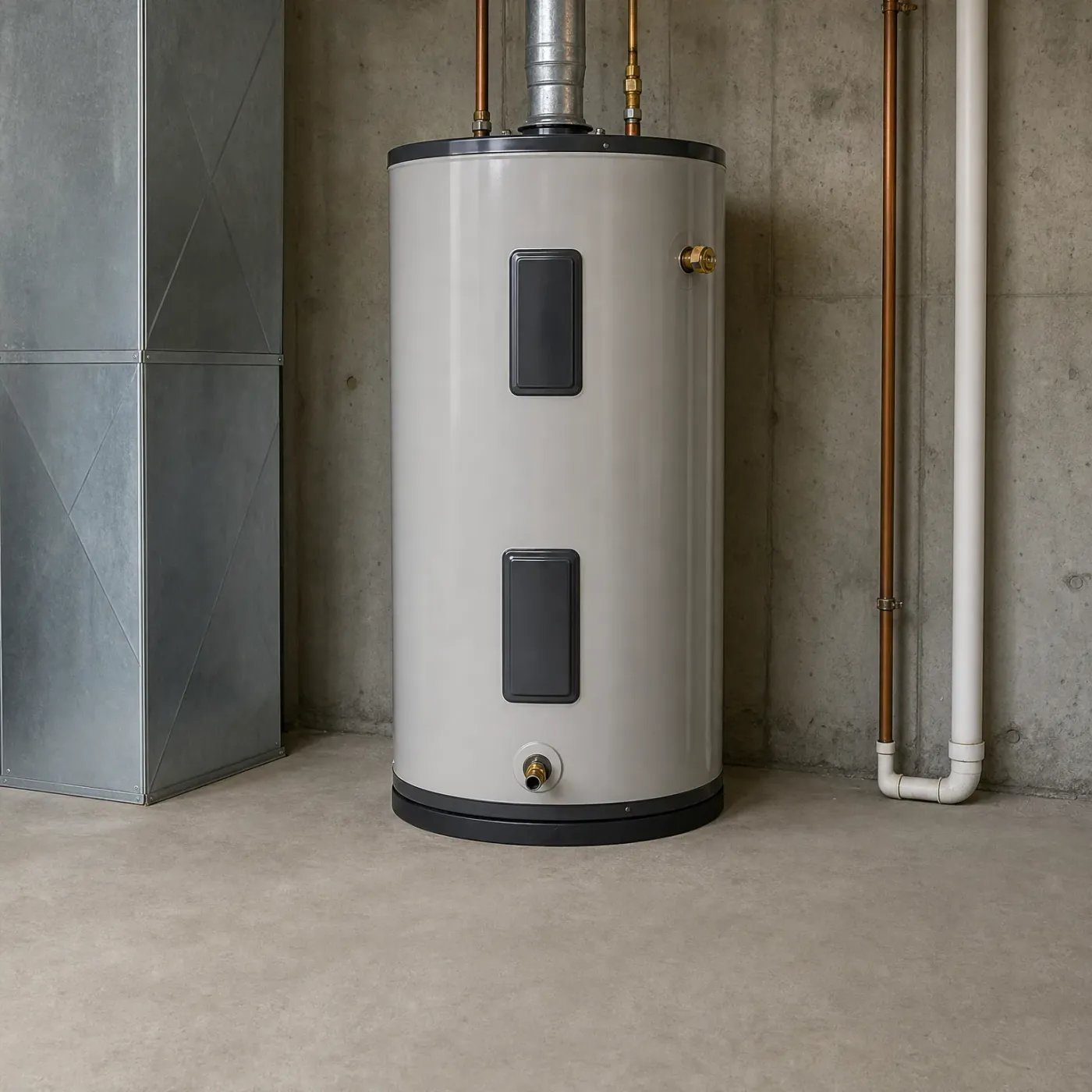
A cylindrical beige water heater with two dark access panels stands on a concrete floor against a concrete wall, with copper and white pipes to the right and sheet-metal ductwork to the left.
This tank has no rust, no soot, and the pipes at the top show no wear, so a lukewarm complaint here almost always comes down to a thermostat setting or a failed element, not the tank itself.
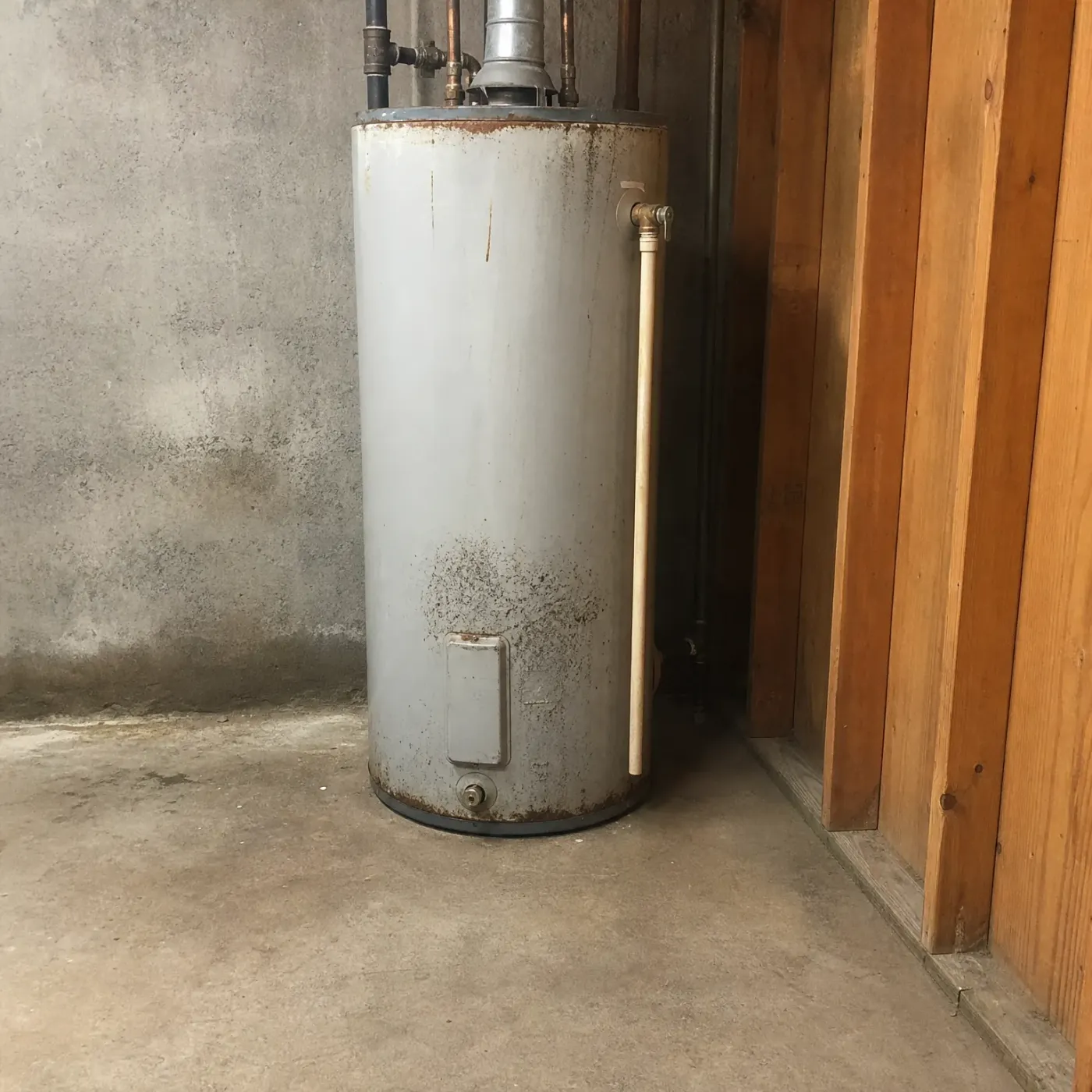
A rusting gray cylindrical water heater with copper pipes and a drain tube stands on a concrete floor against a concrete wall beside vertical wood paneling.
This tank is another story. Corrosion like this around the base and soot near the bottom point to a failing tank, and lukewarm water may be the least of what's wrong with it.
A man in a blue T-shirt sits on a light gray sofa, laughing while looking at an open laptop in the foreground, with a framed picture, lamp and potted plant behind him.
A bearded man in a blue and brown plaid flannel shirt stands indoors looking out a window at snow-covered trees, with a ceramic mug on the windowsill.

90.4% of homes statewide heat with electricity

Almost every home in Florida heats water with electricity instead of gas, and yours is probably no different. That means the lukewarm water you're getting traces back to an element or thermostat, not a pilot light or gas valve. It's a short list of parts to check, which is good news when something's gone wrong.

ACS 2020-2024 5-year B25040

A water heater that gives you lukewarm instead of hot almost always comes down to the same short list: a failed heating element, a thermostat set wrong or reading wrong, or sediment sitting around the lower element so it can't do its job. None of those get better by waiting, and none of them need a new tank. What they need is someone to open the panel, test the elements, and tell you which one quit. Instead of spending an evening searching review sites, calling a few numbers, and explaining the same problem three times to three different people, you send one form and let someone else sort through who's available and who does this kind of repair. You already know where things stand with your water heater. The part that's been eating your time is finding the right person to fix it, and that part is no longer yours to carry.

A dark wood cabinet with a drawer and black knob holds a ceramic vase of green leafy branches and a wooden bowl, beside a window with a woven basket of knit blankets.
Sunlit interior corner with white baseboard molding, cream walls, a wood floor, a woven jute rug, and a potted green plant on a window sill with trees visible outside.
Sunlight falls across a marble countertop by a window, where a small stone bowl with pebbles sits beside a potted pothos plant in a ceramic planter and a folded beige towel.
Exterior corner of a house with lap and shingle-style siding, a white gutter and downspout with offset elbows, a stone veneer base, a window at right, and flowering hydrangea shrubs at lower left in warm low-angle light.
A wooden console cabinet with a caned front holds a ceramic vase of green leafy branches and a shallow wooden bowl, below a framed landscape print on a beige wall beside a curtained window.

Stop chasing a water heater pro

Skip searching for a water heater pro and answer a few questions instead.

Fill out one form

Asking costs nothing, and the choice to hire stays yours.