

Why your water heater is leaking in Florida
Tell a local repair pro what your water heater is doing.
Get matchedA water heater leaks because something inside it failed, and where the water shows up tells you what to check. Water on the floor under the tank often means the tank itself has rusted through from the inside, and once that happens the tank cannot be patched, only replaced. Water around fittings at the top usually points to a loose connection or a valve going bad, which is a repair, not a full replacement. The pressure relief valve can also let water out on purpose, releasing built-up pressure so the tank doesn't fail outright. In Florida, a leaking tank often sits in a garage or closet rather than a basement, so water can spread onto drywall or flooring fast and go unnoticed until it's done damage. Knowing which kind of leak you have changes what happens next, and a closer look at the tank will tell you which one you're dealing with.
Where the leak actually starts
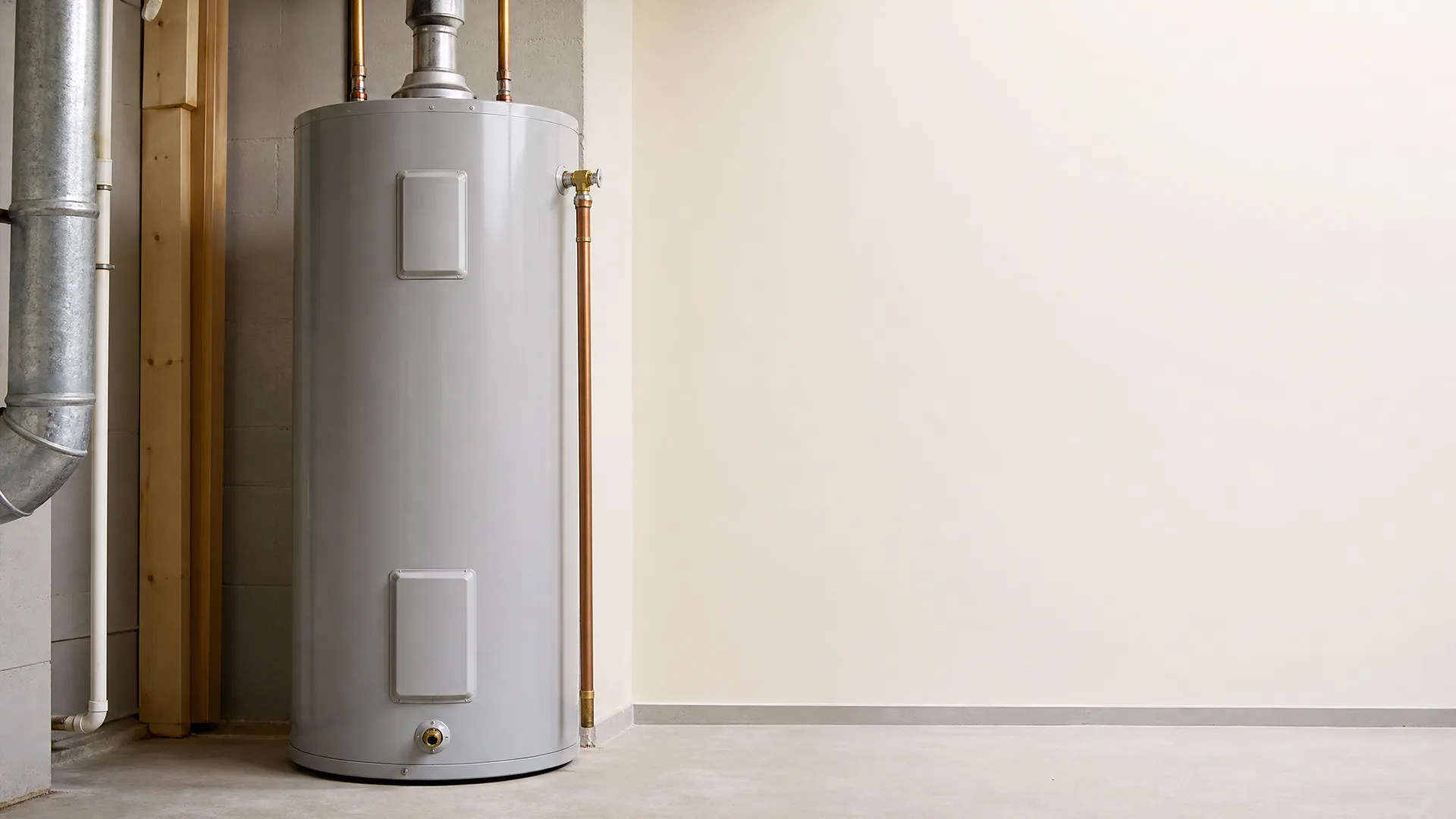
Most tanks have a glass lining inside the steel. Once that lining cracks, the steel underneath rusts from the inside out, and no sealant or patch reaches it. The tank holds water under pressure day and night, so a weak spot eventually gives way. By the time you see water on the floor, the rust has usually been working for a while. The tank is the one part a contractor cannot repair, only replace.
Fittings and valves tell a different story
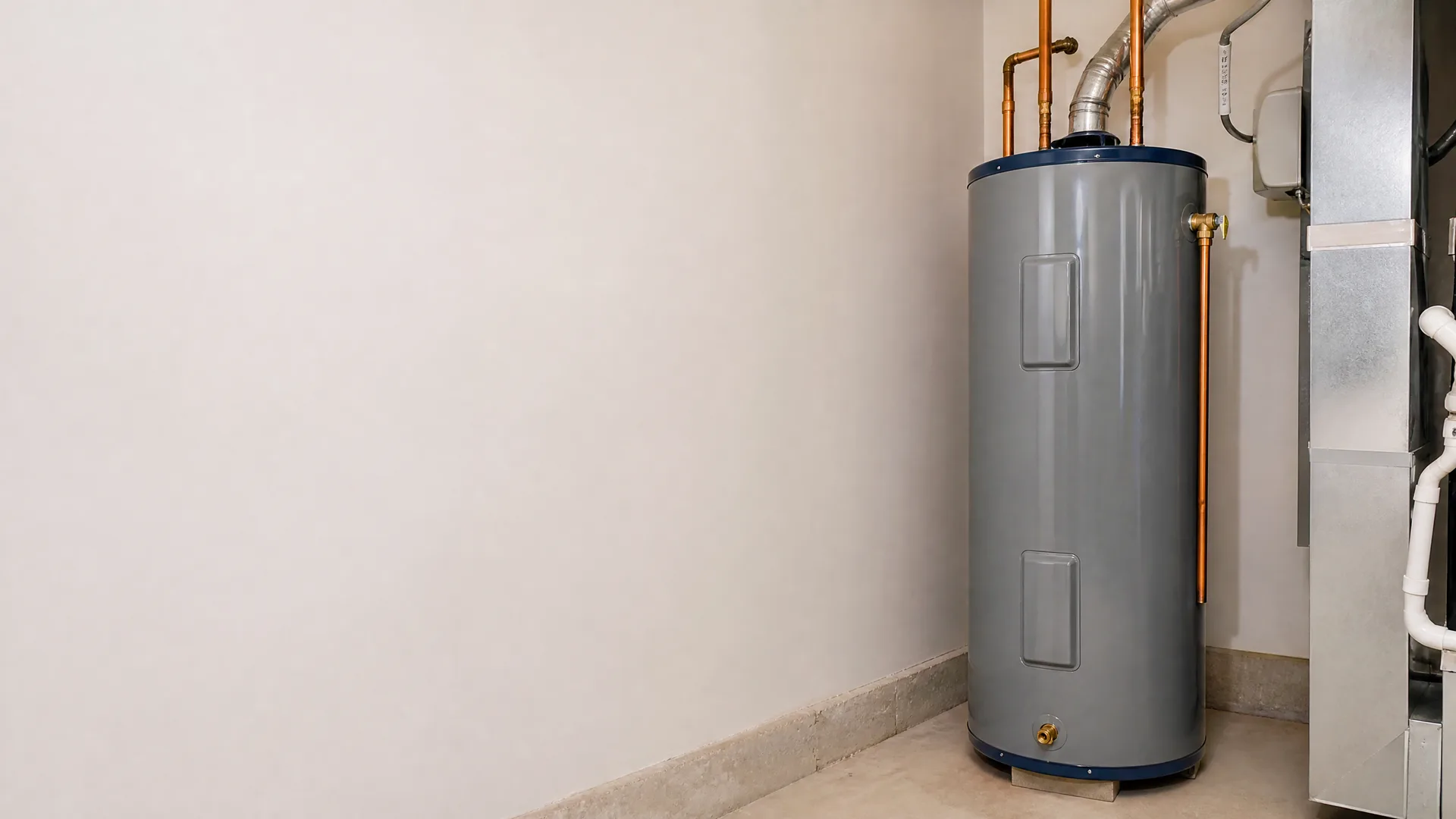
Not every leak means a dead tank. Water pooling near the top often comes from a loose inlet or outlet fitting, a failed pressure relief valve, or a drain valve that never sealed right. Florida's water carries minerals that build up around these connections over years, which can work a fitting loose or keep a valve from closing fully. A contractor can check each connection and valve on its own, and most of these repairs don't touch the tank at all.
Tank Leak or Just a Fitting
Tank Leak
- Water pools under the tank itself, not around a fitting or pipe, and the tank feels damp or rusted on the outside near the bottom.
- The leak gets worse over days or weeks rather than staying the same, because the rust keeps eating through the steel.
- No amount of tightening a valve or fitting stops it, since the water is coming through the metal wall of the tank.
- A contractor who finds this will tell you the tank needs replacing, since a punctured or rusted tank cannot be repaired.
- The water heater may still heat water while it leaks, which is why some homeowners don't catch it until the floor is wet.
Fitting or Valve Leak
- Water shows up at a specific connection point, like where a pipe threads into the tank or where the drain valve sits.
- The leak might only appear when the water heater is running or when pressure in the tank builds up.
- A contractor can often fix this by replacing a fitting, a valve, or the fitting's seal without touching the tank itself.
- Tightening the connection sometimes slows the leak temporarily, though it usually comes back until the part is replaced.
- The tank itself stays dry and sound, so the water heater keeps working once the faulty part is swapped out.
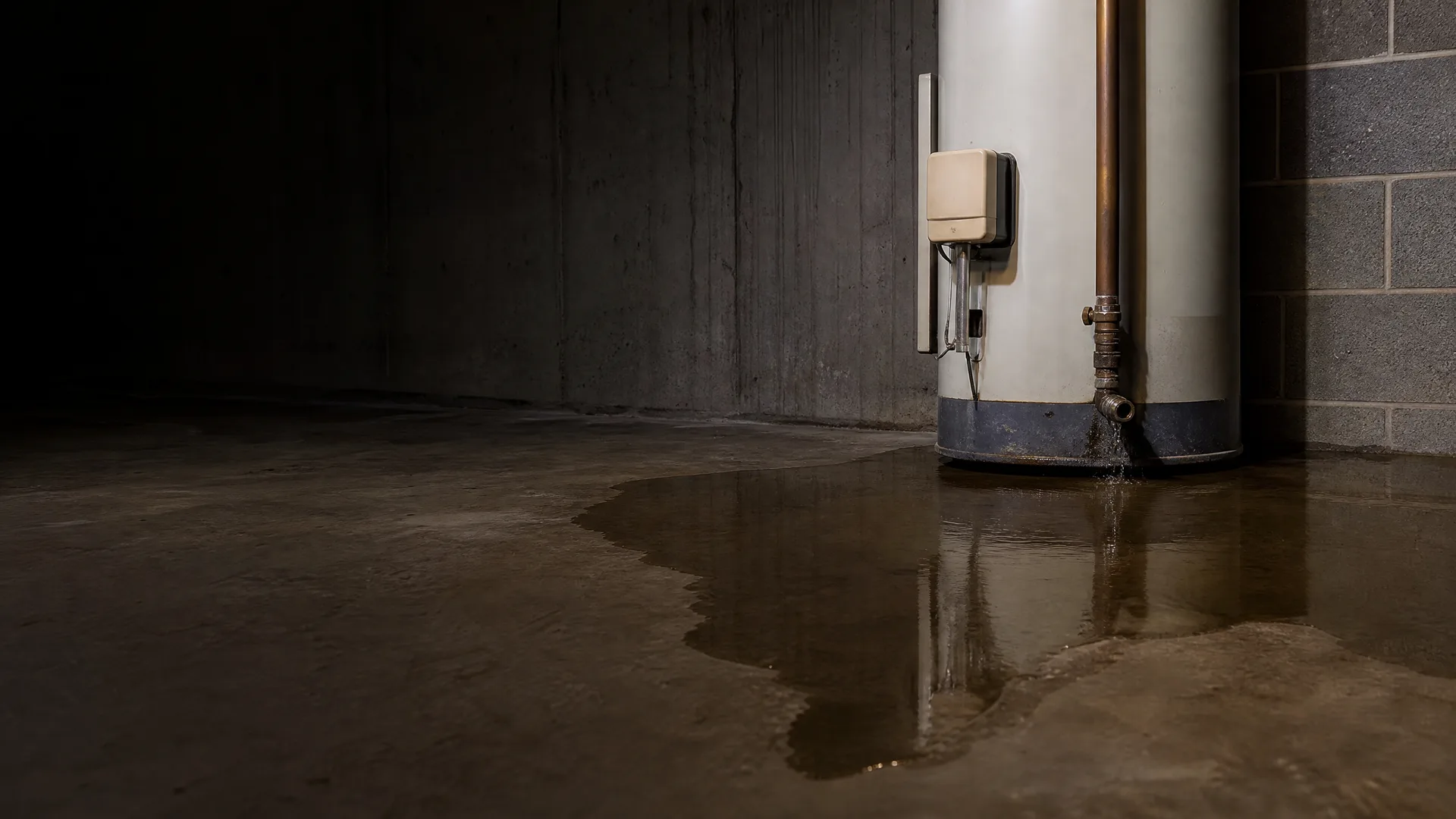
Saturday morning, and you're down in the basement looking for a phone charger you left on a shelf. The concrete floor near the water heater is wet, a few feet out from the base, further than you'd expect from a spill. You crouch down and touch it. Not damp from humidity, actual standing water, spreading slow toward the drain. You run a hand along the bottom of the tank and feel rust under your fingers, flaking off onto your skin. The heater hums along like nothing's wrong, still doing its job. You stand there a second, charger forgotten, trying to remember how old this tank even is.
90.4% of homes statewide heat with electricity
Almost every water heater in Florida runs on electricity, so yours likely does too. When the heating element or thermostat fails, the tank keeps filling past where it should, and the pressure has to go somewhere. That's often where the leak starts.
ACS 2020-2024 5-year B25040

Sediment builds up in the tank and traps heat against the steel.
The glass lining cracks under that heat and lets water through.
Steel underneath starts rusting from the inside out.
Rust eats through the tank wall and water finds a way out.


Get your water heater to the right pro
Once you send the form, finding a pro is off your list.
Describe your water heater job, and a local pro who handles it gets in touch.
Sending the form costs nothing.
Why does my water heater only leak when it's running?
Why does my water heater only leak when it's running?
The pressure relief valve is opening under heat
That valve sits on top of or on the side of the tank, and it's built to open when pressure inside gets too high. Heating element stuck on, thermostat set too hot, or a valve that's gone weak and opens earlier than it should, all three push water out there. It only shows up when the water's actively heating because that's when pressure climbs. Once the tank cools back down, the valve seats again and the leak stops, which is why it looks like it comes and goes. A valve that keeps doing this needs a look regardless, since it's the one part built to protect the tank from building pressure past what it can hold.
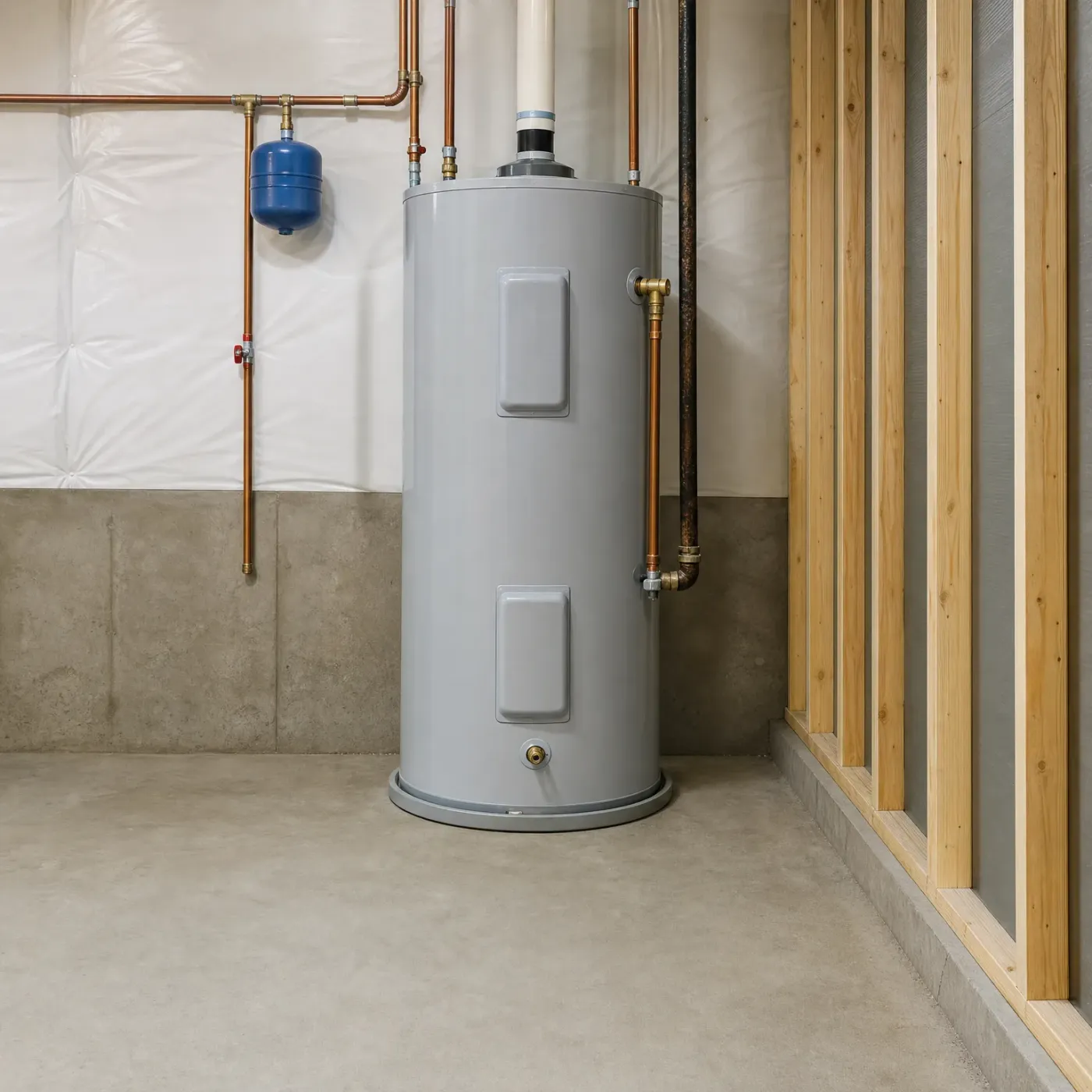
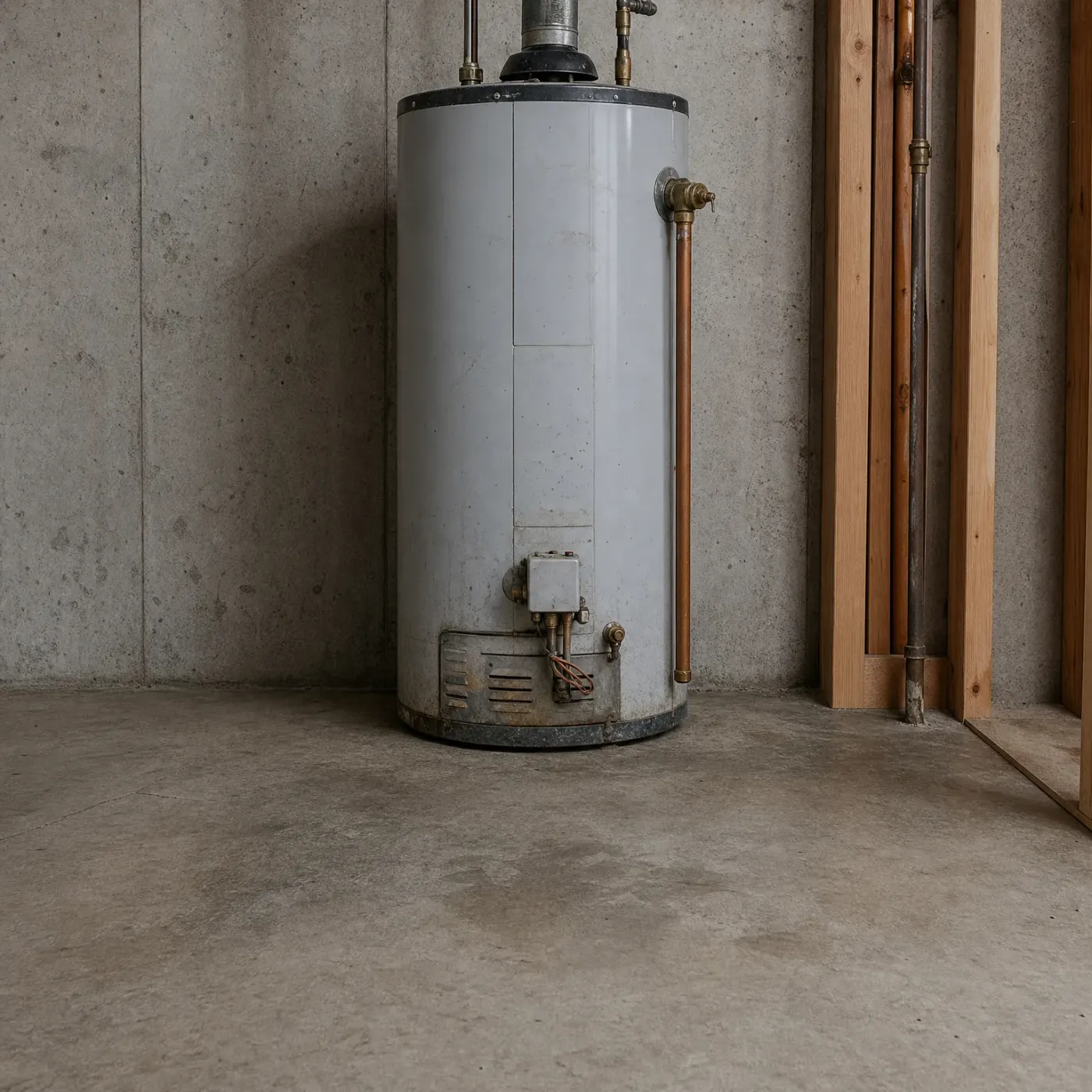
What the Leak Is Telling You
- Water under the tank itself usually means the tank has rusted through and needs replacing, not patching.
- A leak near a fitting or valve is often fixable, since it points to a part rather than the tank wall.
- A pressure relief valve that drips only while the heater runs is doing its job under too much pressure.
- Sediment sitting at the bottom of the tank speeds up the rust that eventually causes a leak.
- A leak that worsens over days rather than staying steady means rust is actively eating through steel.
- Where the water shows up first tells you more than how much water there is.
A leaking water heater is never random. It's either the tank itself, which means the steel has rusted through, or it's a fitting, valve or connection, which usually means a part failed and can be replaced. The location of the water is the first clue, and it holds up better than the amount of water on the floor. A puddle under the tank, especially one that keeps spreading over days, points to rust working through the tank wall from the inside. That's not something a contractor can seal or patch. A drip higher up, near a valve or where a pipe connects, often points to a part doing exactly what it's supposed to do, or one that's starting to wear out. The pressure relief valve dripping only when the heater is running fits that second case. It's responding to pressure building inside the tank, and that pressure has to go somewhere. Sediment sitting at the bottom of the tank plays a part too, since it traps heat against the steel and speeds up the rust that eventually breaks through. None of this is complicated once you know where to look. The tank wall failing and a part failing look different, act different and lead to different repairs. A contractor working on your water heater checks the same things: where the water started, whether it's getting worse, and what sits at the point where it's coming from. That's what decides what happens next.




Water Heater Repair
The right pro for this job
After you send the request, you're done searching.